


5 Free Calorie Counting Apps That Actually Stay Free

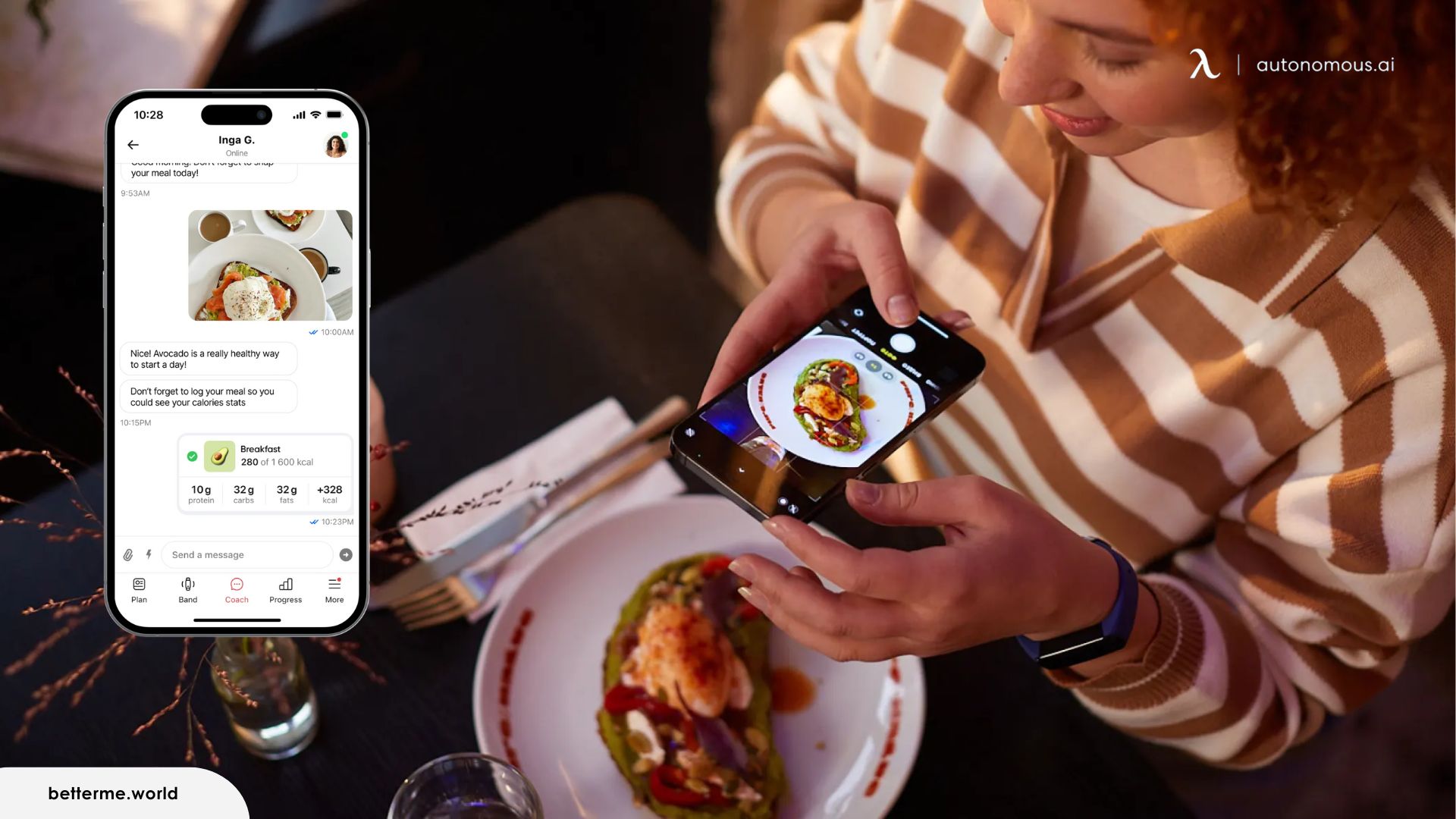
Tracking what you eat should not come with a subscription. A good free calorie counting app helps you understand your daily intake, build steadier healthy habits, and stay consistent without added cost or friction. The catch is that many apps advertise "free" and then cap logging, hide the food database behind a paywall, or push a trial after a few days.
This guide covers five apps that stay genuinely free for everyday tracking, how they differ, and what you can realistically do without upgrading. It also covers the half of the equation an app cannot measure for you: the calories you burn.
How We Define a Truly Free App
A truly free calorie app lets you log food, see your daily calorie total, and keep doing both long term without paying. Plenty of trackers offer a free download but limit the parts that matter. To make this list, an app had to clear five simple tests:
- Free core tracking. You can log meals and view daily totals without a cap or a countdown to a paywall.
- No forced subscription or trial. No credit card required, and features do not vanish after onboarding.
- Food database you can actually search. Common foods and everyday brands are available without upgrading.
- Long-term usability. The app does not slowly strip features or interrupt logging until you pay.
- Basic insights included. Daily calorie balance and simple trends are visible on the free version.
Apps that only look free during the first week did not qualify. The five below hold up weeks and months later.

Quick Comparison
Here is a fast look at how the five apps differ on the things you notice in daily use: how the food database works, whether you need an account, and what each one does best.
App | Food database | Sign-up | Best known for |
Cronometer | Verified, curated entries | Required | Accurate, well-sourced nutrition data |
MyFitnessPal | Very large, mostly user-submitted | Required | Fast logging and huge food coverage |
Lose It! | Standard everyday foods | Required | Simple, motivating daily tracking |
FatSecret | Community-powered, barcode scan free | Optional | Low-friction start, free barcode scanning |
MyNetDiary | Verified, structured entries | Required | Organized daily planning and consistency |
All five let you log food, see daily totals, and keep tracking without being pushed into a paid plan. The details below help you match one to how you like to log.
The 5 Best Free Calorie Counting Apps
1. Cronometer
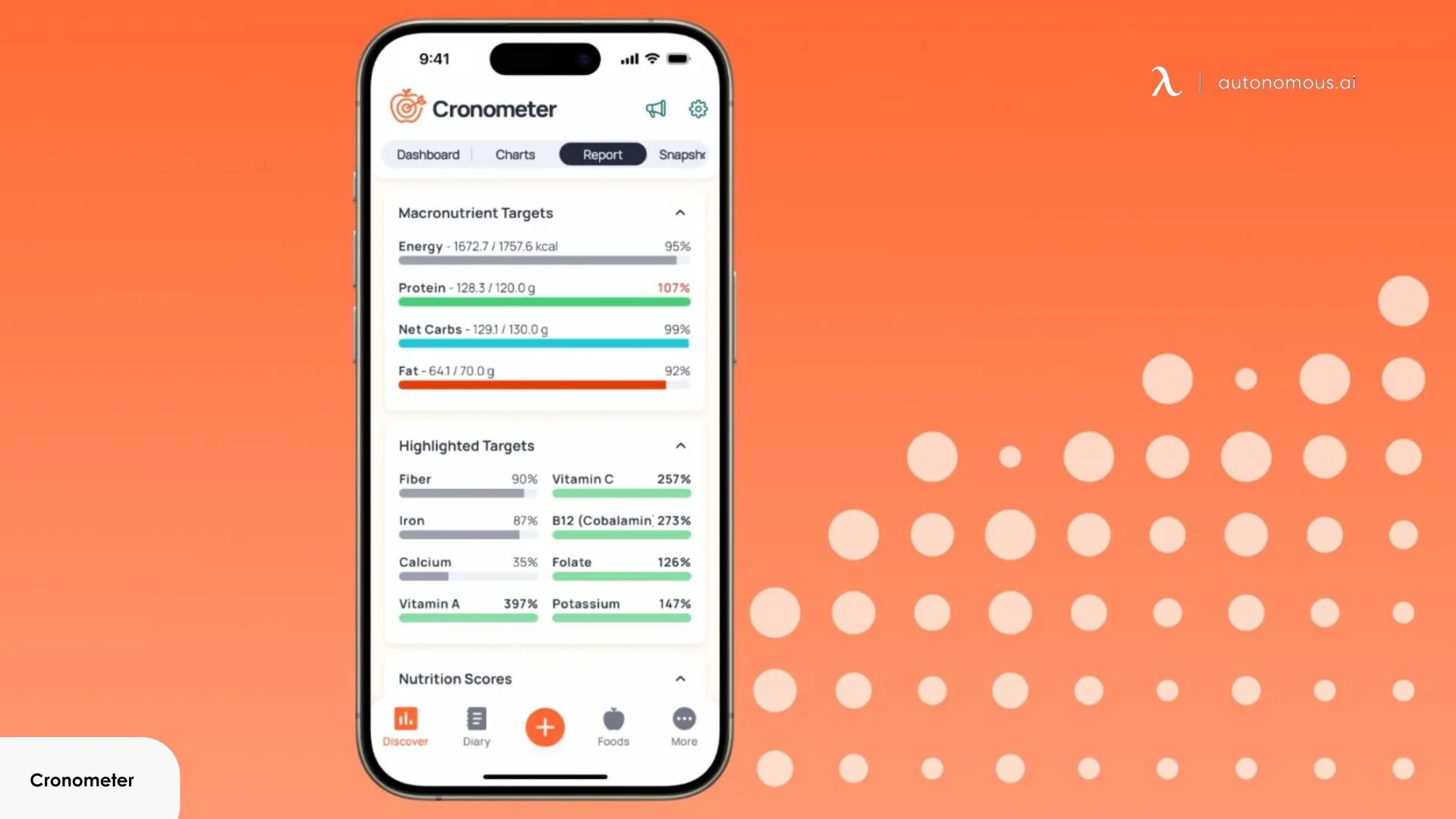
Cronometer is the most data-accurate of the free options, which makes it the pick for anyone who wants precision over simplicity. Its free version lets you log meals, track daily calories, and see a full nutrient breakdown drawn from a verified, curated database rather than a pile of user guesses. That accuracy is the point: entries are checked, so you are less likely to log a food with numbers someone made up.
The interface leans technical, and daily totals sit alongside detailed micronutrient data, which helps if you want to understand how intake relates to your overall calorie expenditure. Beginners may find it busy at first. An account is required to save progress, but the free tier stays fully usable long term.
Pros: verified, accurate food data; core tracking stays free; detailed nutrient view. Cons: requires an account; can feel technical for beginners.
2. MyFitnessPal
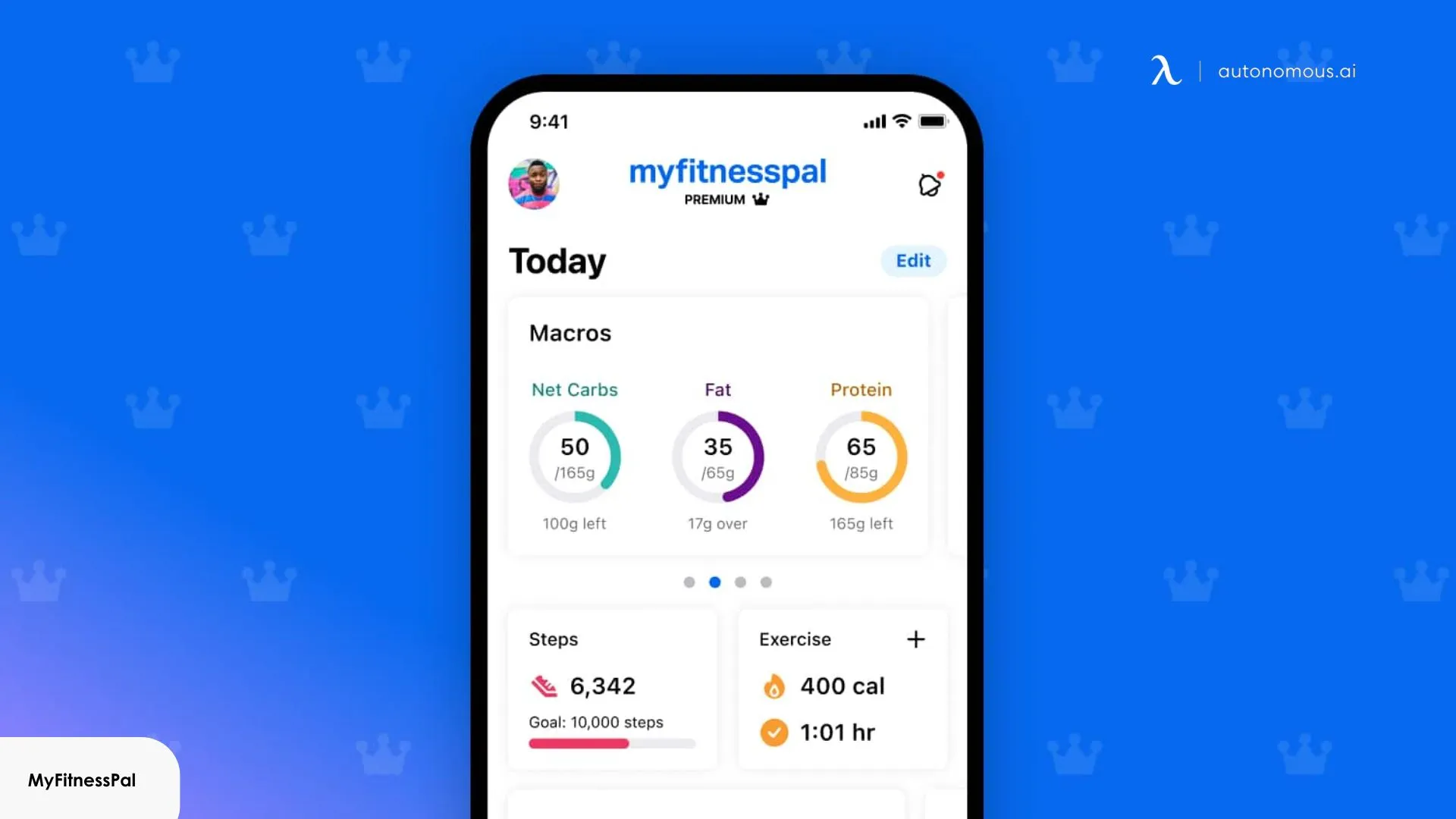
MyFitnessPal is the most familiar tracker and the fastest for everyday logging, thanks to a very large database that includes home-cooked meals, restaurant items, and packaged foods. For quick, low-effort logging, its scale is hard to beat, and saved meals make repeat entries fast.
Two things to know. Much of the database is user-submitted, so accuracy varies between entries for the same food. And barcode scanning, once free, now sits behind the Premium tier, so free users log by search. The core experience still works without paying, which keeps it a practical free option for most people.
Pros: enormous, diverse food database; fast logging with saved meals; beginner-friendly. Cons: frequent ads and upgrade prompts; barcode scanning requires Premium.
3. Lose It!
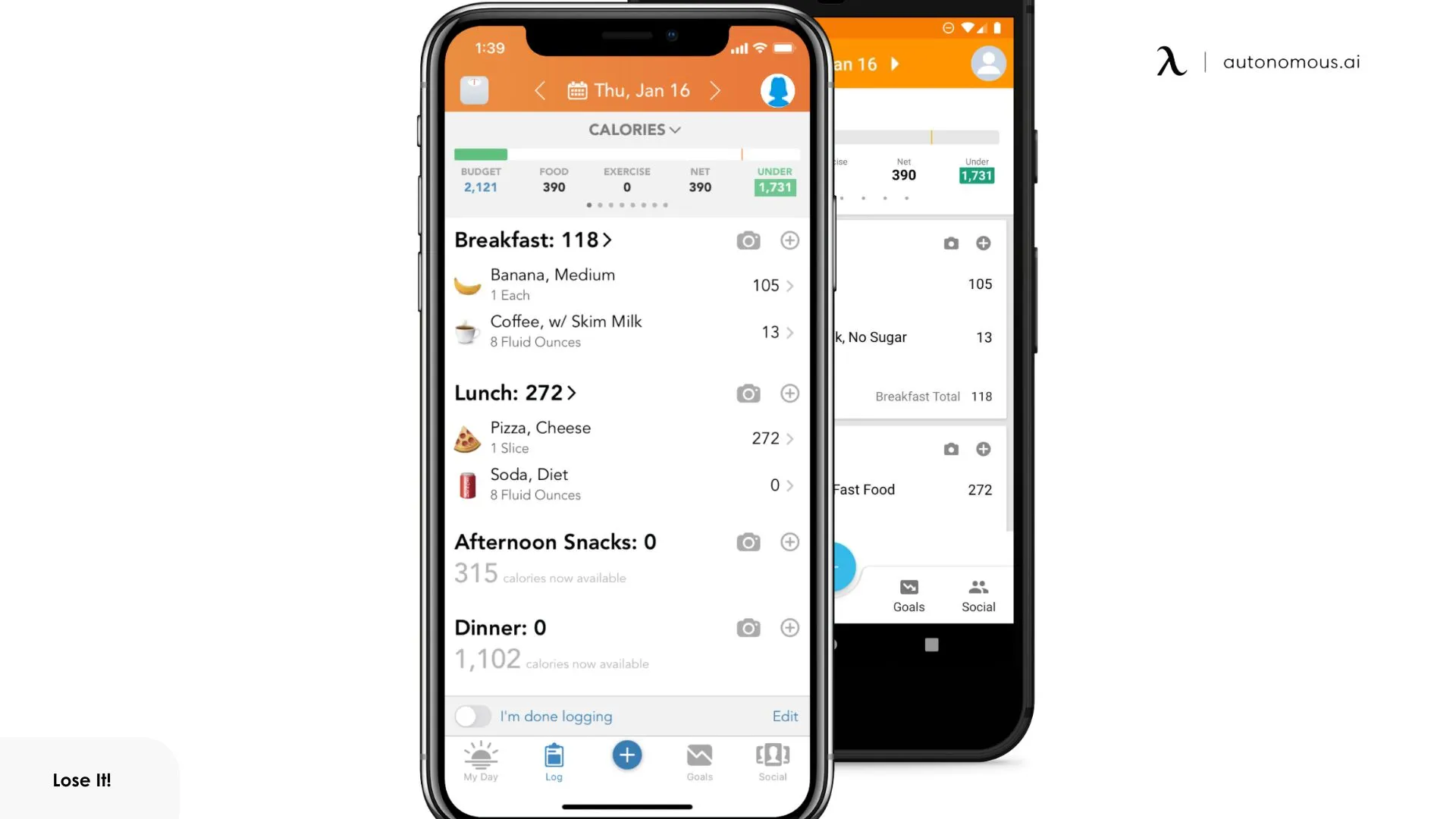
Lose It! is built for momentum rather than depth, which makes it the easiest of the five to stick with. Instead of dense nutrition analysis, it centers a clear daily calorie limit, visual progress cues, and lightweight logging that feels achievable from day one.
That simplicity is the appeal: it lowers the friction that makes people quit tracking after a week. The free version keeps daily tracking working over time, with some deeper features reserved for premium. It suits anyone who wants gentle routine support rather than a spreadsheet, especially on iPhone.
Pros: clean, beginner-friendly design; core tracking stays free; easy to keep up daily. Cons: limited nutrition detail on the free plan; some features are premium-only.
4. FatSecret
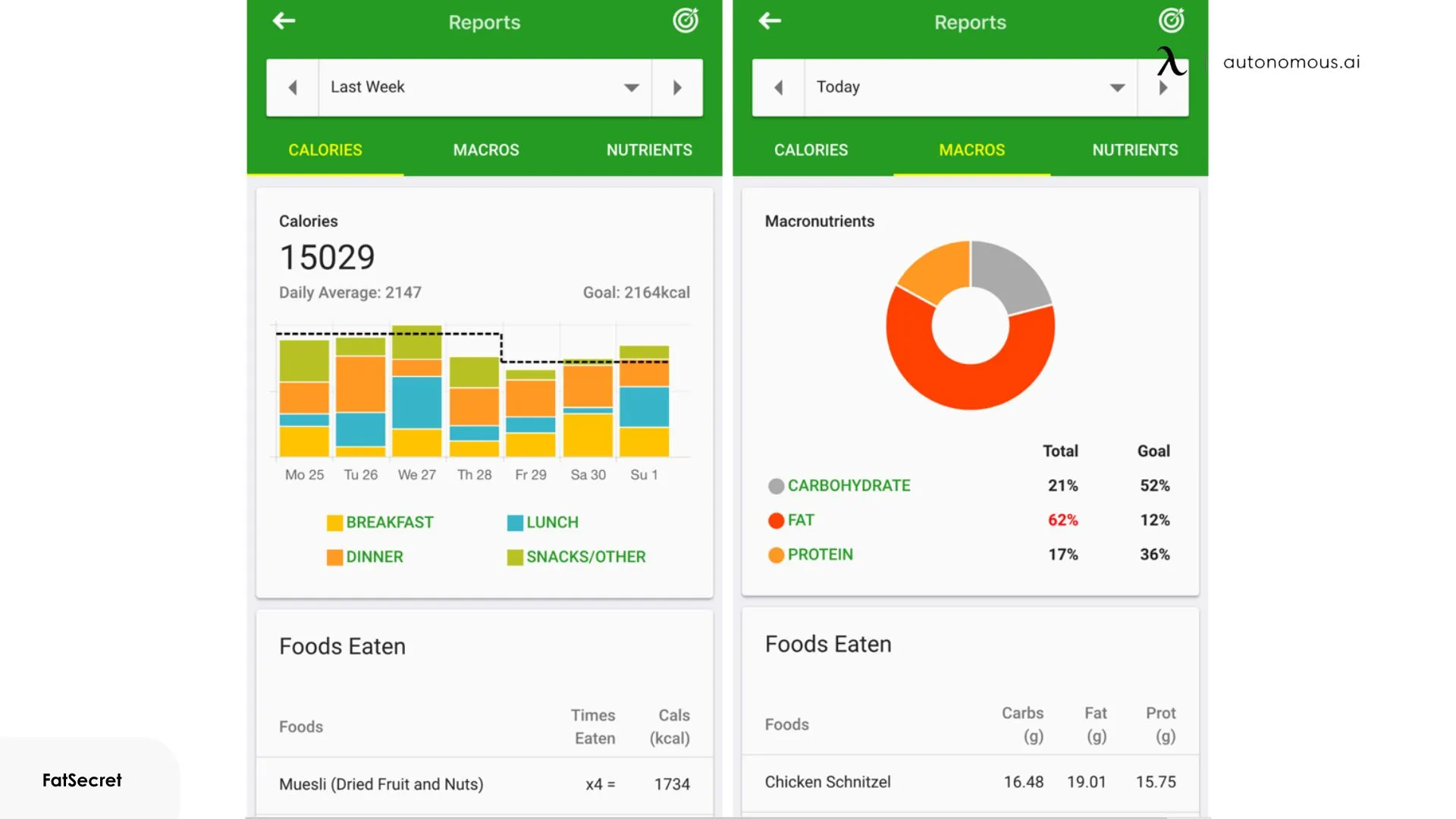
FatSecret is the most open of the five: account creation is optional, and core tracking works without forcing a sign-up. That makes it the best pick if you want to try calorie tracking without handing over your details first, or without a "free trial" that turns into a bill.
Its standout free feature is barcode scanning, which many apps now reserve for paid tiers. The database is community-powered, so it covers a wide range of foods quickly, though accuracy can vary between entries. The interface is more utilitarian than polished, but it prioritizes access and staying free over design flourishes.
Pros: optional account lowers the barrier; barcode scanning free; no trial-to-paywall trap. Cons: community data varies in accuracy; interface feels dated.
5. MyNetDiary
MyNetDiary is built for structure, which makes it the best fit for people who want daily tracking to feel organized rather than open-ended. It guides logging through clear prompts and meal flows, and its database is staff-verified rather than crowd-sourced, so entries tend to be more consistent.
The layout emphasizes planning as much as tracking, with a clean daily breakdown that helps you stay consistent even when routines shift. The free tier stays stable without sudden lockouts. Some customization is reserved for upgrades, and quick on-the-go logging is a little less flexible than a search-first app.
Pros: structured, step-by-step logging; verified database; stable free experience. Cons: some options require an upgrade; less flexible for fast logging.
One trend worth noting: AI and photo-based trackers that estimate calories from a picture are growing in 2026, but that feature is still usually limited or paid, and its accuracy is inconsistent. For reliable free tracking, manual logging in one of the apps above remains the safer bet.
The Other Half: The Calories You Burn
A calorie app measures only what you eat. The other side of the equation is what your body burns, and for people who sit at a desk most of the day, that side quietly shrinks. Most of the daily difference in calories burned between active and sedentary people comes not from workouts but from everyday movement, sometimes called non-exercise activity thermogenesis, or NEAT.
Standing and moving more during the workday adds to that side, though modestly. A Mayo Clinic meta-analysis of 46 studies found that standing burns about 0.15 calories per minute more than sitting, which works out to roughly 54 extra calories over a six-hour day for an average adult. That is small on its own, and no desk setup replaces exercise. The real value is breaking up long stretches of sitting, which keeps you moving, supports posture, and adds small amounts of movement that accumulate over time.
If you spend your day at a desk, a standing desk or simple active sitting habits make it easier to stay in motion while you work. Paired with an app that tracks intake, you end up watching both sides of the equation instead of one, which is closer to how active calories actually add up across a day.

A Note on Using These Apps Well
Calorie tracking works best as a tool for awareness, not pressure. Dietitians who review these apps caution that fixating on numbers can become stressful for some people, and that calorie counting is not required to eat well or reach a health goal. If logging starts to feel anxious or obsessive rather than helpful, it is worth stepping back or talking with a healthcare professional. Used lightly, these apps help you notice patterns; they are not meant to control every bite.

FAQs
Is there a free calorie counting app?
Yes. Several apps allow users to log food, track daily calorie intake, and view basic summaries without paying or starting a trial. The key is choosing an app where core calorie tracking remains usable long term, not just during onboarding.
What's the best free app for calorie counting?
There is no single best option for everyone. The best free app depends on whether you value accuracy, simplicity, speed, or structure, and whether the app remains usable without requiring a subscription.
Is there a free calorie counter by picture?
Some apps offer photo-based food logging, but this feature is usually limited or locked behind paid plans. For consistent and reliable calorie tracking, most free apps still rely on manual food logging rather than image recognition.
Is there a completely free calorie counting app with no subscription?
Yes, a few apps offer calorie tracking without requiring a subscription. These apps typically support meal logging and calorie totals indefinitely, though they may include ads or optional upgrades.
Is there a free calorie counting app with no sign up?
Some apps allow limited use without creating an account, especially for basic calorie logging. However, saving progress across days usually requires sign-up, even in a free calorie counting app.
What is the best free calorie counting app for the iPhone?
Several free calorie counting apps are well optimized for iPhone and iOS. The best option depends on whether you value clean design, quick logging, or more structured daily tracking.
Is a free calorie counting app accurate?
Accuracy depends on the quality of the food database and how foods are logged. Apps that use verified data sources tend to be more reliable than those relying heavily on user-generated entries.
Can a free calorie counting app work long term?
Yes, as long as the app keeps core features available without forcing upgrades. A free calorie counting app that supports long-term use is often more valuable than one with advanced features locked behind a paywall.

Conclusion
The right free calorie counting app is the one you can keep using, not the one with the longest feature list. Any of these five lets you track intake without a subscription, so the choice comes down to whether you want accuracy, simplicity, flexibility, or structure. Whichever you pick, remember it only tells half the story: pairing it with regular movement during your day gives you a fuller view of your habits. Start with the app that feels easiest to return to, and let the routine build from there.

References
- Mayo Clinic News Network - "Standing several hours a day could help you lose weight, Mayo Clinic research finds" (Saeidifard et al., 2018 meta-analysis of 46 studies). https://newsnetwork.mayoclinic.org/discussion/standing-several-hours-a-day-could-help-you-lose-weight-mayo-clinic-research-finds/
- Harvard Health Publishing - "Stand more, burn (slightly) more calories." https://www.health.harvard.edu/staying-healthy/stand-more-burn-slightly-more-calories
- Fortune - "5 Best Calorie Counter Apps (2026)," including registered-dietitian commentary on healthy use. https://fortune.com/article/best-calorie-counter-apps/
- Garage Gym Reviews - "8 Best Calorie Counter Apps: RD-Approved (2026)." https://www.garagegymreviews.com/best-calorie-counter-apps