The 7 Best Office Chairs for Hemorrhoids 2026

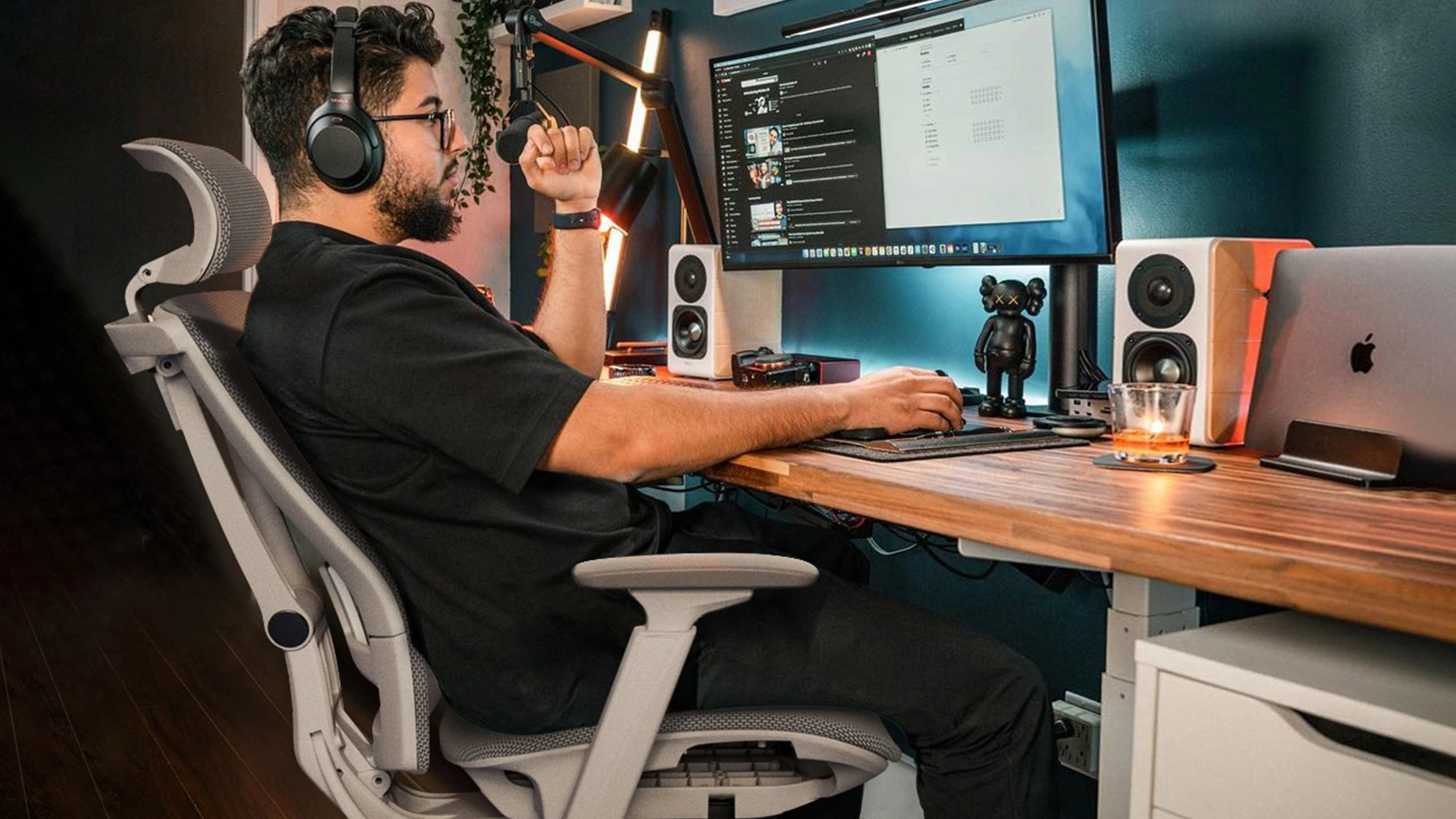
The best office chair for hemorrhoids has a breathable seat that spreads your weight off the rectal area, adjustable seat depth to shift load onto your thighs, and enough recline to change position through the day.[1] It won't fix the condition, but it reduces the pressure, heat, and circulation problems that keep symptoms flaring across an 8-hour workday. Three properties matter most: breathability (heat aggravates the tissue), pressure distribution (weight concentrated on one spot is the source of the irritation), and adjustability (so you keep shifting instead of staying static). This guide covers chairs that handle all three, plus three cushions for people who can't replace their chair, and the sitting habits that matter as much as the seat. See a doctor for persistent or severe symptoms.
How sitting affects hemorrhoids, and why your chair matters
Sitting concentrates your body weight on the pelvic region and compresses the veins around the rectal area, which is why chair choice affects hemorrhoid symptoms. That sustained pressure, combined with reduced circulation, creates the conditions that worsen existing hemorrhoids and can trigger new flare-ups.[2]
Standard chairs make it worse in four ways:
Increased rectal pressure. Body weight naturally concentrates on the lower pelvis when seated, and poorly padded or non-ergonomic chairs apply direct pressure to swollen tissue. The longer you sit without repositioning, the more pronounced the compression becomes.
Restricted circulation. Prolonged sitting causes blood to pool in the lower-body veins, reducing the circulation needed for healing and increasing swelling and inflammation, which extends discomfort well beyond what proper movement would.
Heat accumulation. Non-breathable chair materials trap heat and moisture against your body. Elevated temperature irritates sensitive tissue, and sweating adds friction that aggravates the area through the workday.
Poor posture. Chairs lacking lumbar support encourage slouching, which shifts weight onto the rectal area, while forward-leaning postures compress the pelvis. This postural stress compounds the direct pressure from sitting.
The 7 best office chairs for hemorrhoids
We judged seven chairs on the things that actually change how a workday feels when you have hemorrhoids: whether the seat has a soft, forgiving surface instead of a hard edge, how well it keeps heat and moisture off the sensitive area, and how easily you can shift position. Each entry leads with the pain point it solves, because the right pick depends on whether heat, pressure, firmness, or budget is your main problem. An ergonomic chair manages symptoms, it does not treat them, so pair any of these with movement, a cushion where noted, and medical advice.
Ultra 2 | Embody | Mesh | Core | Newtral | Sihoo | SIDIZ T50 | |
Seat surface | Webbing + spring | Pixelated | All-mesh | Mesh + PU | Firm foam | Mesh, waterfall | Fabric, waterfall |
Breathable | ✓ | ~ | ✓ | ✓ | ✗ | ✓ | ~ |
Seat-depth adjust | ✓ | ✓ | ✓ | ✓ | ~ | ✗ | ✓ |
Best for | Overall | Premium | Heat and pressure | Budget pick | Firm-seat camp | Budget mesh | Softer middle-ground |
Price | $449 | $1,849 | $499 | $299 | $539 | $350 | ~$450 |
1. Autonomous ErgoChair Ultra 2, best overall

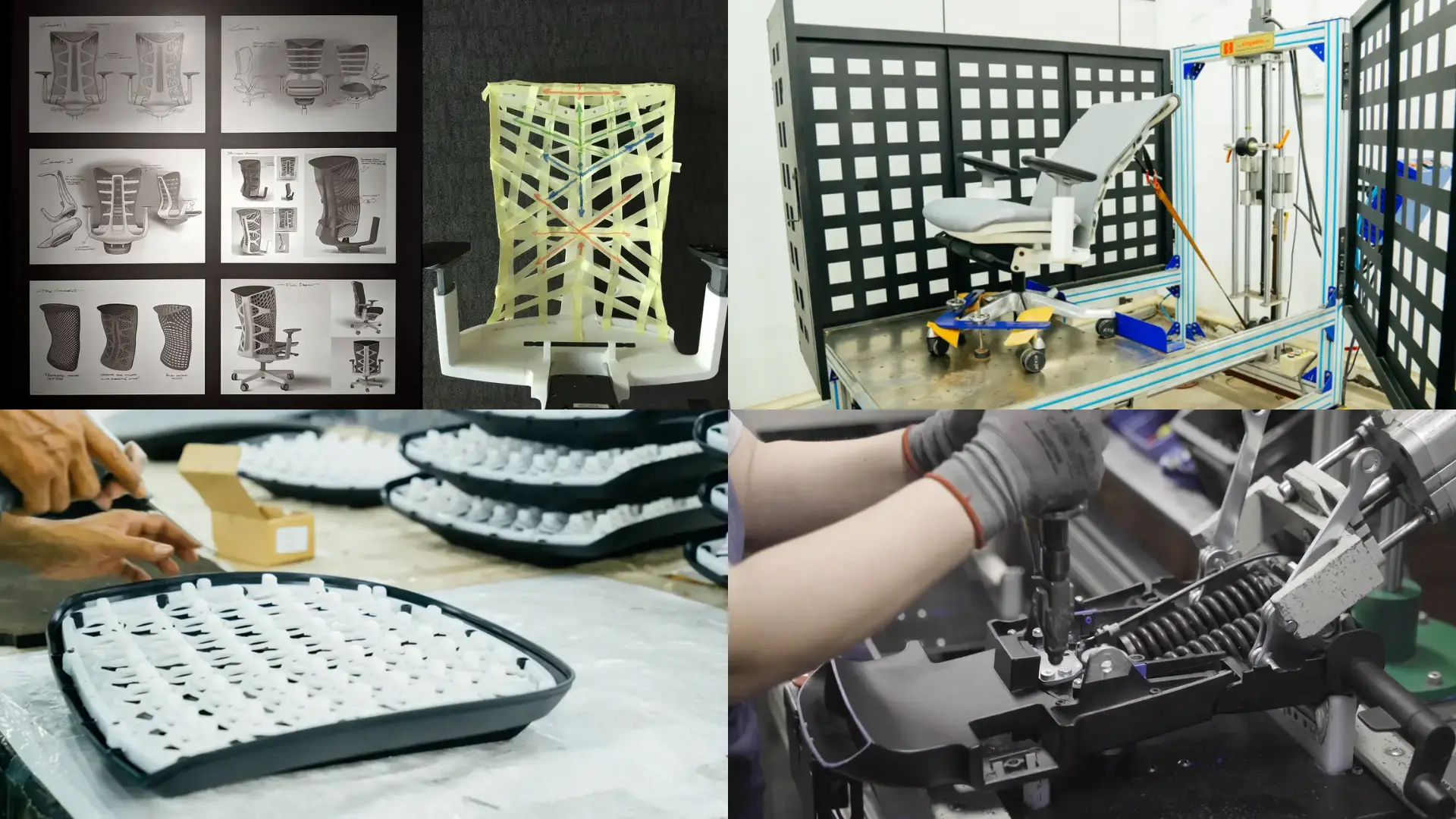
If a full workday leaves you sore and shifting every few minutes to find a spot that does not hurt, the ErgoChair Ultra 2 is built for exactly that. Its four-layer webbing-and-spring seat has no hard front edge to press into the sensitive area, and it works the way ergonomics reviewers describe a good suspension seat, as a shock absorber that spreads weight across the whole surface instead of loading the tailbone. The thermoplastic layer also dissipates heat rather than trapping it.
Adjustable seat depth lets you set the front edge behind your knees so your thighs carry more of the load, and the 25-degree recline offloads pressure when you lean back, both of which reviewers and clinicians link to better circulation. During an acute flare it will not replace a cushion, but for daily management it keeps pressure and heat off the spot longer than any foam seat here.
Pros:
- Webbing-and-spring seat spreads weight with no hard edge to press the sensitive area
- Seat-depth, recline, lumbar, and 4D arms let you keep changing position
- 320 lb capacity and aluminum base for long-term stability
Keep in mind: it manages symptoms rather than treating them, so during a flare-up pair it with a U-shaped cushion below.
Ideal for: people with persistent discomfort who sit 6 to 8 hours and want the deepest adjustment to keep pressure and heat moving off the area.
2. Herman Miller Embody, best premium pressure distribution
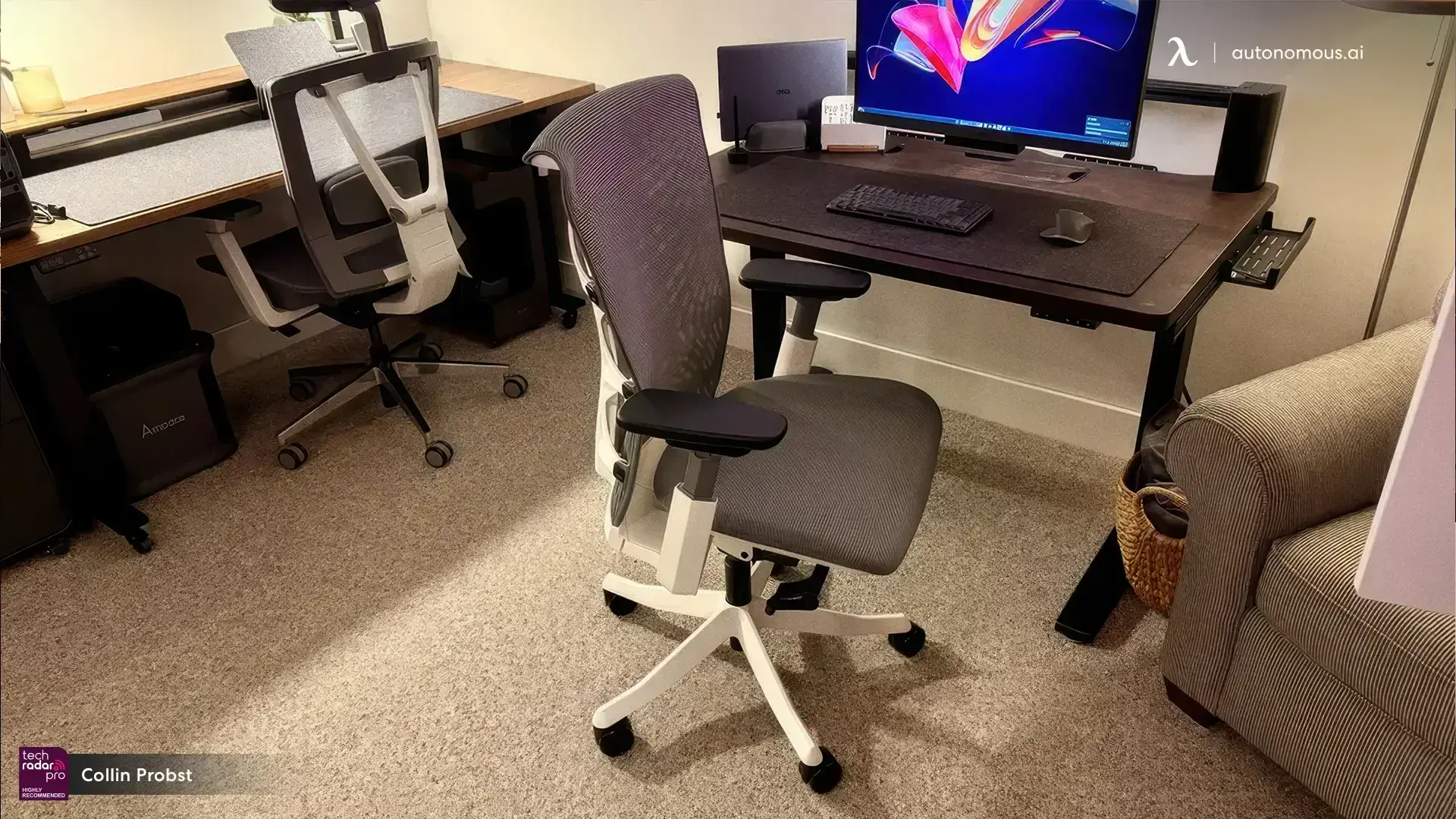
If you want the most even pressure distribution money can buy, the Embody spreads your weight across hundreds of independent points instead of one foam pad, and its suspension seat flexes as you move rather than compressing in one spot, which keeps blood flow active in your lower body.
Here is the honest part, though: the Embody is engineered for spinal alignment, not hemorrhoid-specific relief, so the benefit comes from general pressure distribution rather than any targeted feature. At $1,800-plus with no coccyx cut-out, a well-chosen $40 cushion on a cheaper chair delivers a large share of the same relief. Buy the Embody for its build and all-day comfort, and add a cushion if you need direct tailbone offloading.
Pros:
- Pixelated suspension seat avoids the foam-flattening of cushioned chairs
- Rebalances support as you move, so circulation is not pinned in one spot
- Holds its support level after years of daily use
Cons:
- Engineered for posture, not hemorrhoid-specific relief, and has no coccyx cut-out
- Premium price and replacement-part costs hard to justify for symptom relief alone
- Complex to configure at first
Ideal for: people who want premium ergonomic engineering and durability first, and view better pressure distribution as a bonus rather than the main reason to buy.
3. Autonomous ErgoChair Mesh, best breathable seat
.jpg)
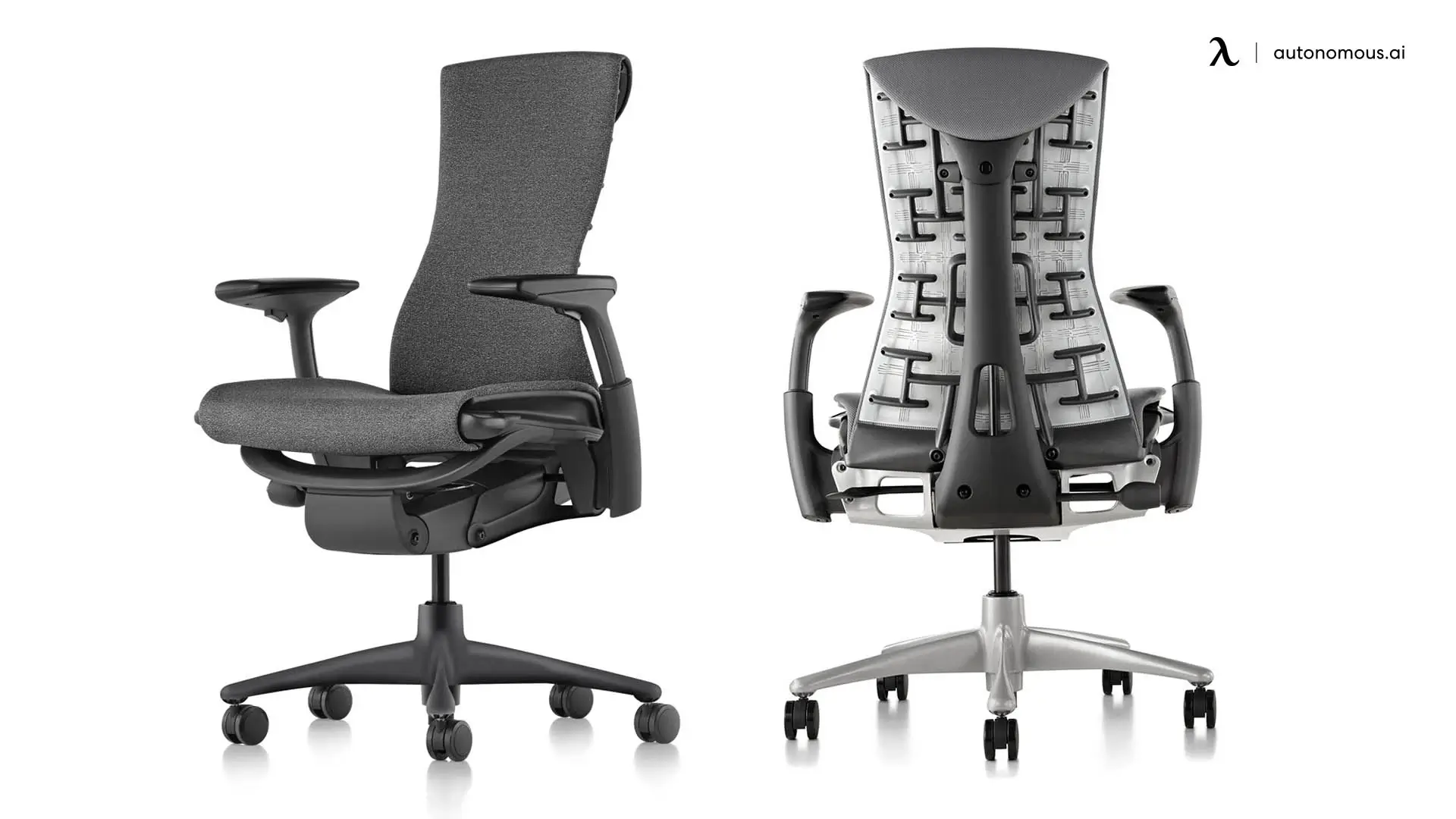
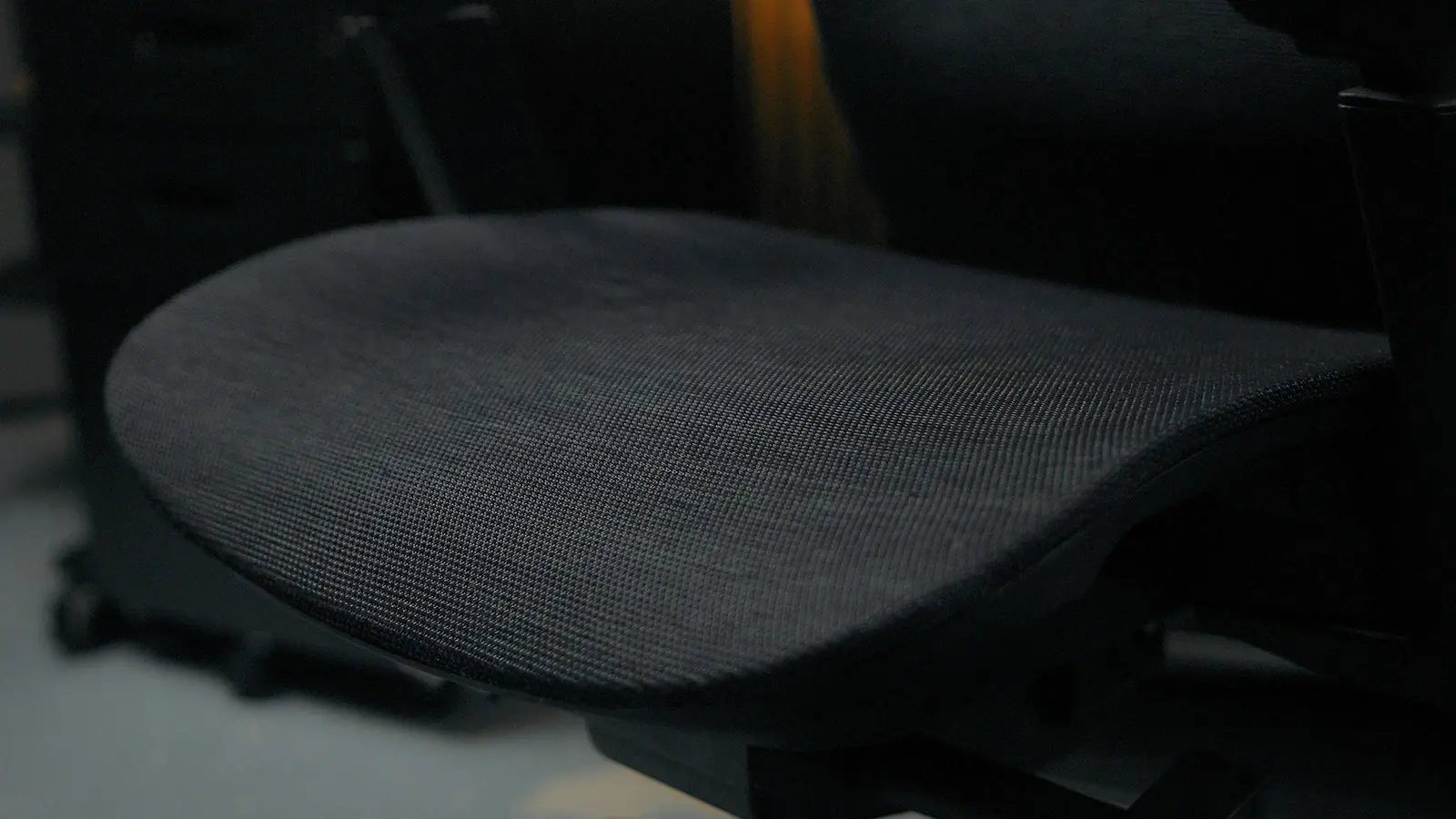
If heat and sweat are what set your symptoms off, the ErgoChair Mesh is the pick, because its seat and back are both mesh rather than foam. Reviewers who cover seating for hemorrhoids consistently note that breathable mesh keeps heat and moisture off the sensitive area and helps circulation, and the Mesh's German air-mesh seat does that while flexing to spread your weight instead of compressing under it.
It shares the ErgoChair Pro's adjustability, a sliding lumbar you position on your lower back, seat-depth adjustment, 3D arms, and a 22-degree recline, so you can move load onto your thighs and change your angle through the day. The one difference from the Pro is the seat material, mesh instead of molded foam, which is exactly what makes it the better choice when heat is your trigger.
Pros:
- All-mesh seat and back maximize airflow and limit the heat that worsens irritation
- Mesh seat spreads weight without foam compression
- Sliding lumbar, seat-depth, and 3D arms for a precise fit
Keep in mind: it has no coccyx cut-out, so pair it with a U-shaped cushion below for targeted tailbone relief during a flare-up.
Ideal for: people whose discomfort is driven by heat and moisture and who want an all-mesh, fully adjustable seat.
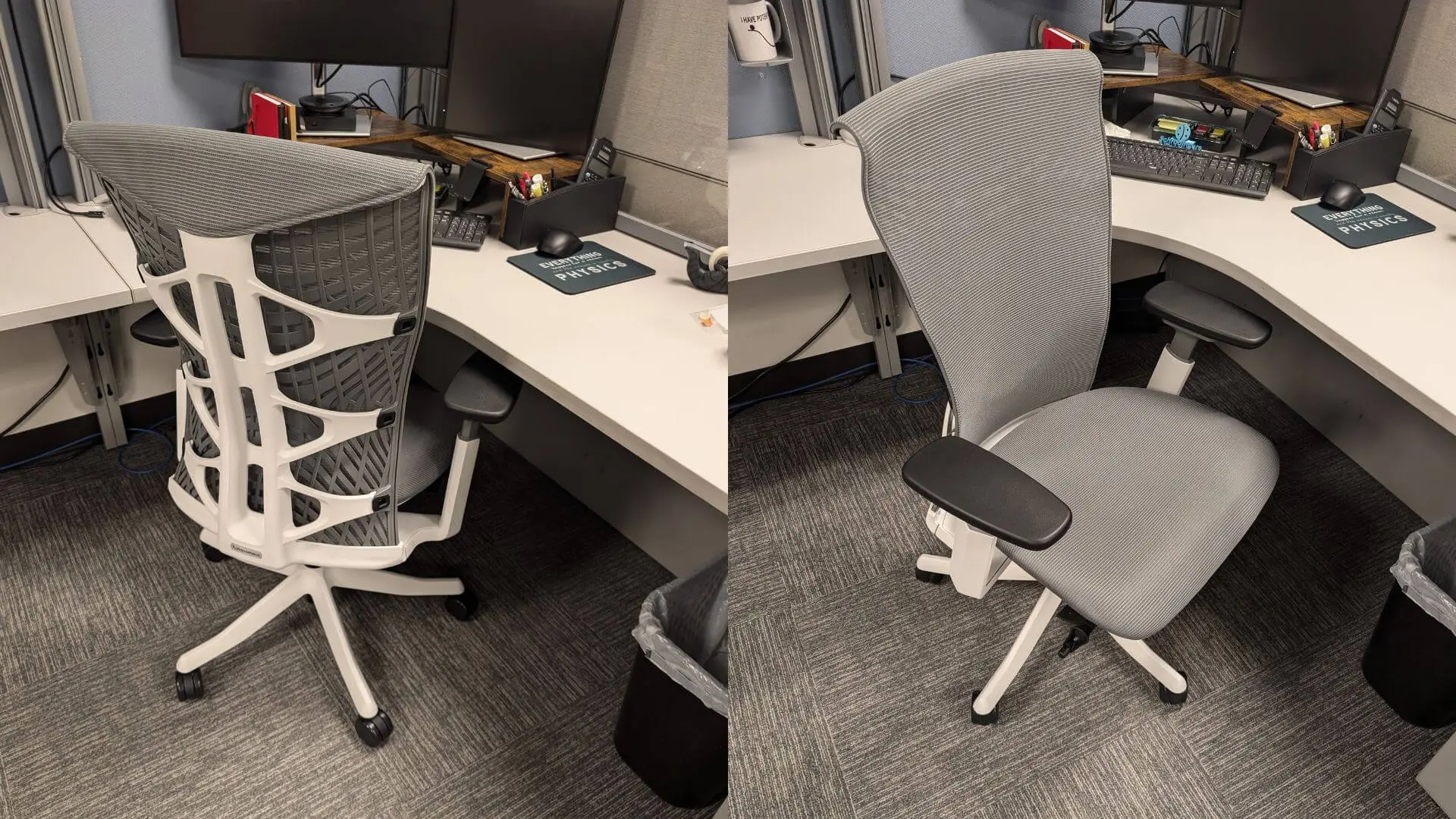
4. Autonomous ErgoChair Core, best budget pick
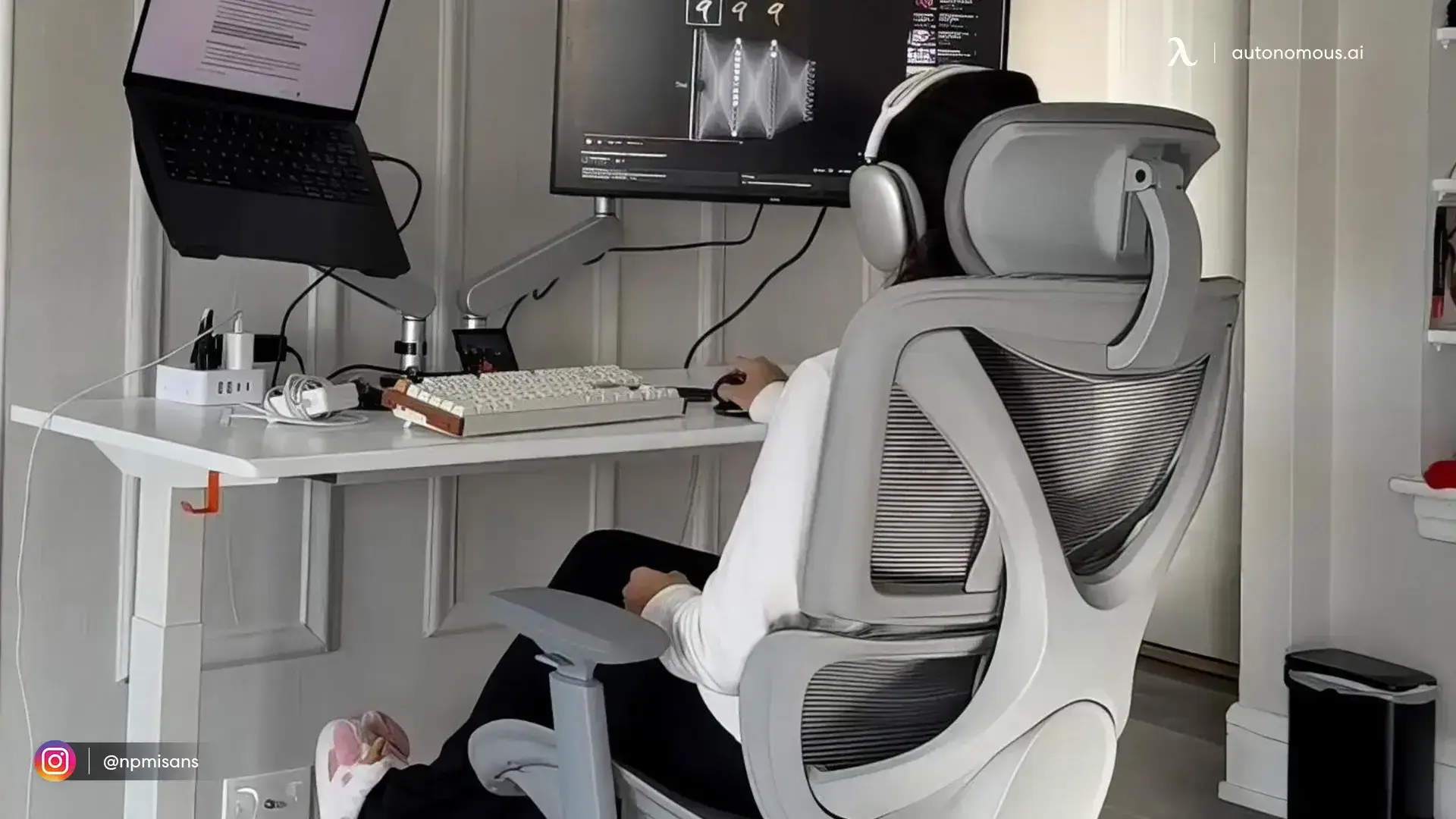
At $279 the ErgoChair Core is the budget pick that does not skip the feature that matters most for hemorrhoids: it is a full breathable-mesh chair, and owners single out how cool it stays. One writes that after years of a sweaty back in a warm apartment, the Core is the first chair that keeps them cool all day; another in Florida heat calls the mesh magic. For a condition that heat and moisture reliably worsen, that airflow is the whole point, and the mesh spreads weight without the compression of foam.
It also adjusts more than its price suggests, with seat-depth and height adjustment so you can move load onto your thighs, 3D arms, and a smooth 130-degree recline to offload pressure through the day. The honest limits are budget ones: the passive dual backrest supports your spine but is not a lumbar you position, the seat edge feels firm out of the box and softens over a few weeks according to owners, and the warranty is two years. During that break-in or an acute flare, a U-shaped cushion smooths the edge.
Pros:
- Full breathable mesh keeps heat and moisture off the sensitive area, its standout for this use
- Seat-depth, height, tilt, and 3D arms at an entry price
- Dual backrest supports posture to keep weight off the pelvis
Keep in mind: the mesh seat edge is firm until it breaks in, so pair it with a cushion early on or during a flare-up.
Ideal for: budget buyers who run warm and want a genuinely breathable, adjustable mesh chair, with a cushion added for direct tailbone relief.
5. Newtral NT002, best firm-foam option
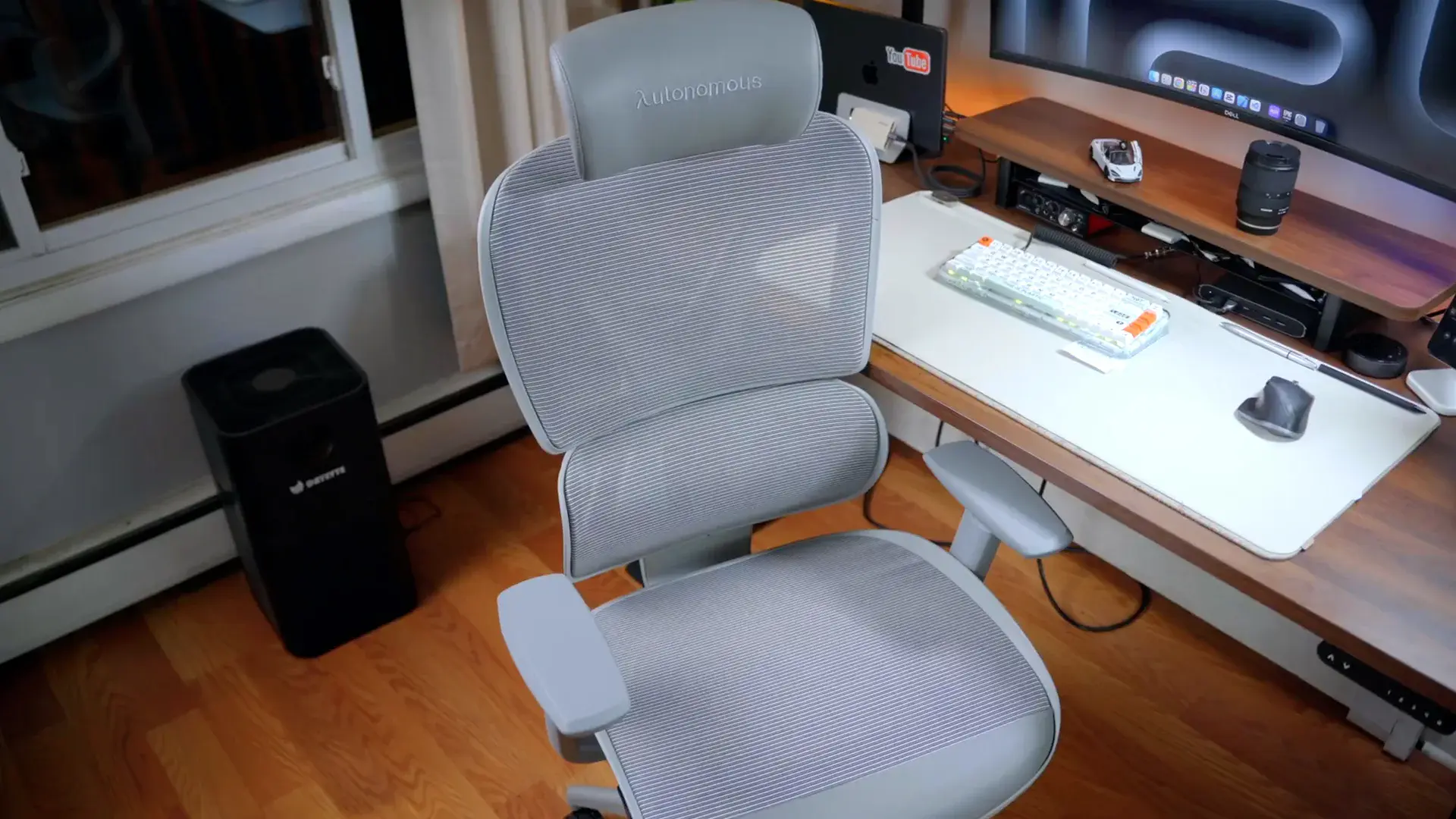
Some people find that soft or mesh seats make symptoms worse by letting them sink into a single pressure point. If that is you, the Newtral NT002 takes the opposite approach: a high-density foam seat firm enough to keep your sit bones elevated and your weight spread across a broader surface rather than settling into the sore spot.
Its self-adjusting lumbar responds to movement as you recline, nudging the small posture changes that keep static pressure from building. The honest trade-off is heat, since a foam seat traps more warmth than mesh, so it suits people whose symptoms are not temperature-driven. It sits in a middle tier: more structured than a basic task chair, less specialized than a chair engineered for pressure relief, and it pairs well with a contoured cushion if you want targeted offloading on top of the firm base.
Pros:
- Firm foam resists bottoming out and keeps the sit bones elevated
- Self-tracking lumbar encourages automatic posture changes
- Familiar cushioned feel for people who dislike mesh suspension
Cons:
- Limited airflow, so not for heat-driven symptoms
- Heavier frame makes frequent repositioning less convenient
Ideal for: people with mild symptoms who find soft seats make things worse and want a firm, supportive base, ideally with a cushion added for direct relief.
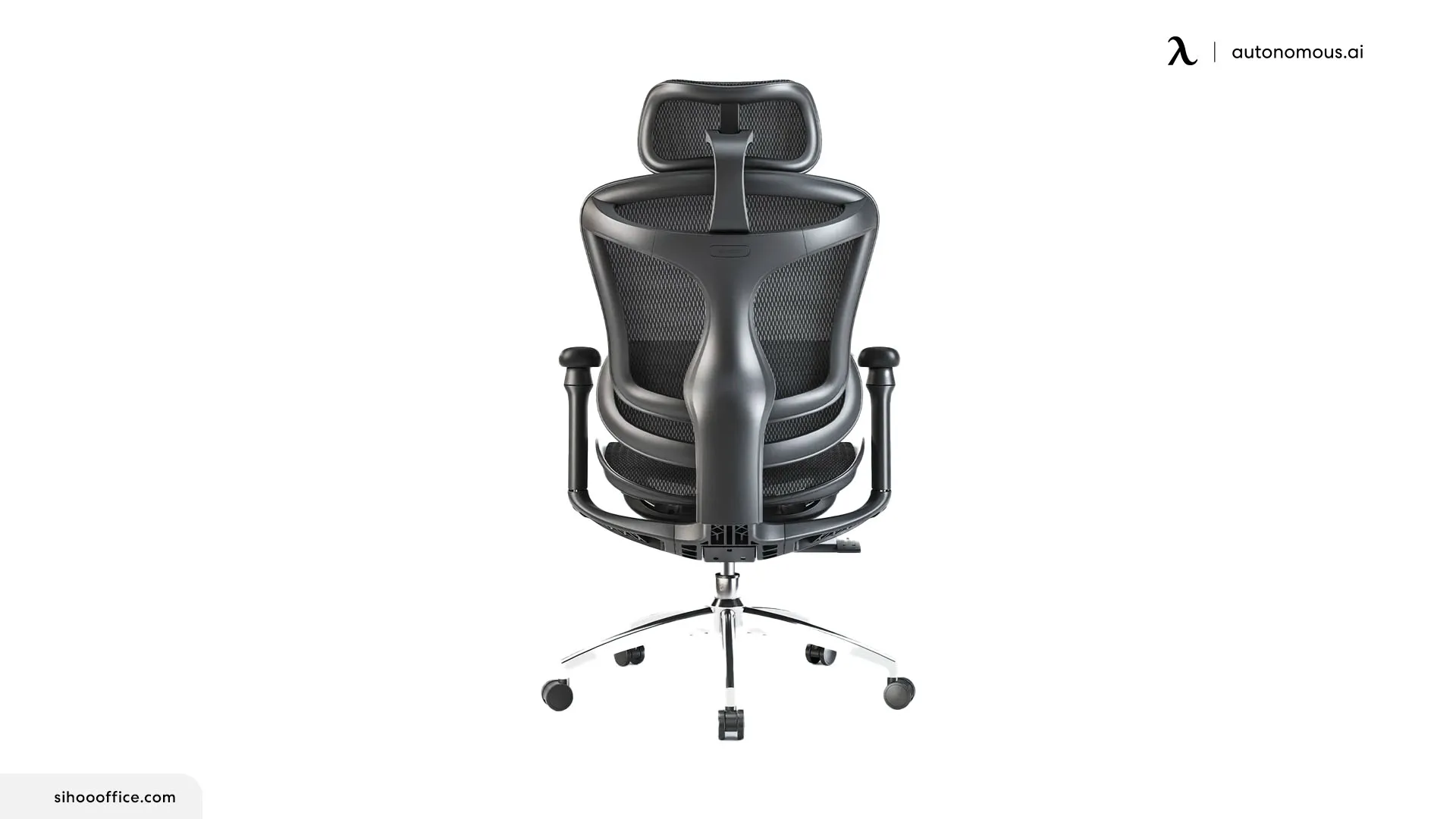
6. Sihoo Doro C300, best budget mesh
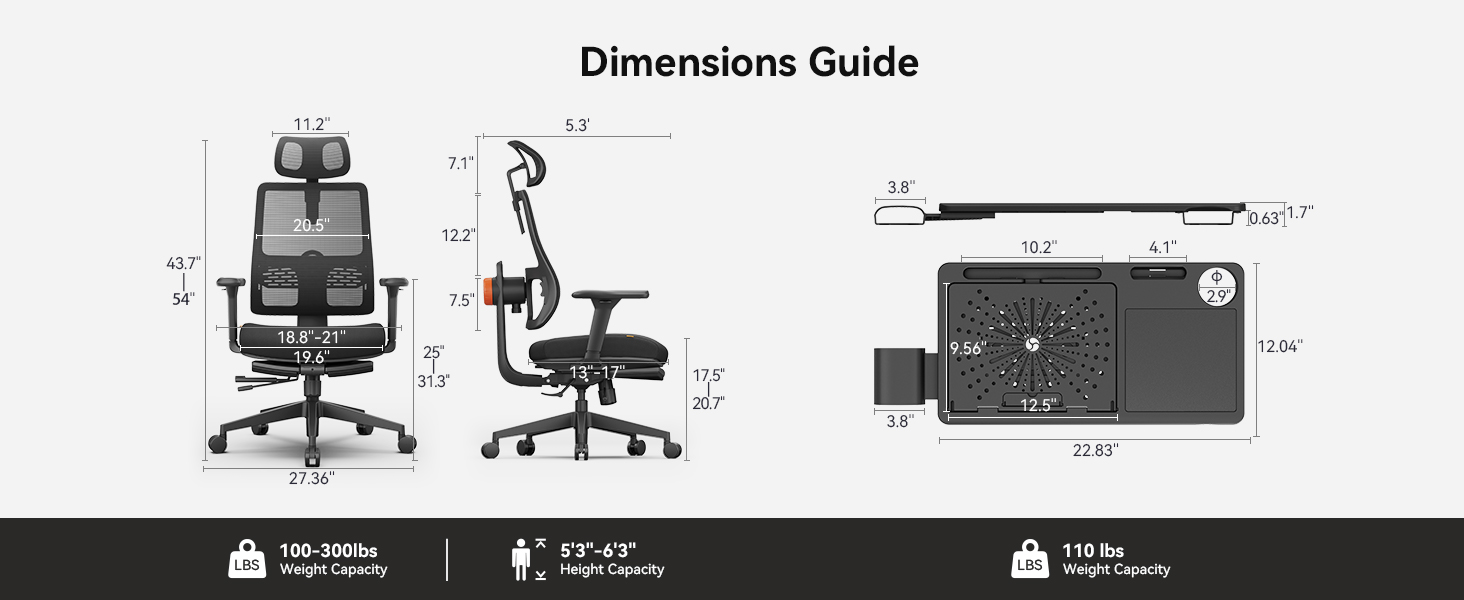
For the essentials on a budget, the Sihoo Doro C300 pairs a full-mesh seat with a waterfall front edge, the feature reviewers point to most for hemorrhoids, since the edge slopes down and away from the backs of your knees to ease pressure and let more blood flow to your legs. The full-mesh build across seat and back keeps airflow constant, which addresses the heat that intensifies discomfort.
Its self-adaptive lumbar adjusts tension as you lean, promoting the movement that avoids long stretches of static pressure, and the weight-sensing recline balances automatically. It handles mild to moderate symptoms well, though it will not give the targeted coccyx relief of a contoured design, so many owners pair it with a cushion.
Pros:
- Waterfall mesh seat eases pressure behind the knees and improves circulation
- Full-mesh airflow limits heat buildup
- Self-adjusting lumbar and strong value at its price
Cons:
- No seat-depth adjustment, and fit is best for users 5'2" to 6'2"
- Armrests can feel loose according to multiple owner reviews
- Firmer mesh will not suit people who want cushioning
Ideal for: budget buyers who want breathable, waterfall-edge seating and plan to add a cushion for targeted tailbone support.
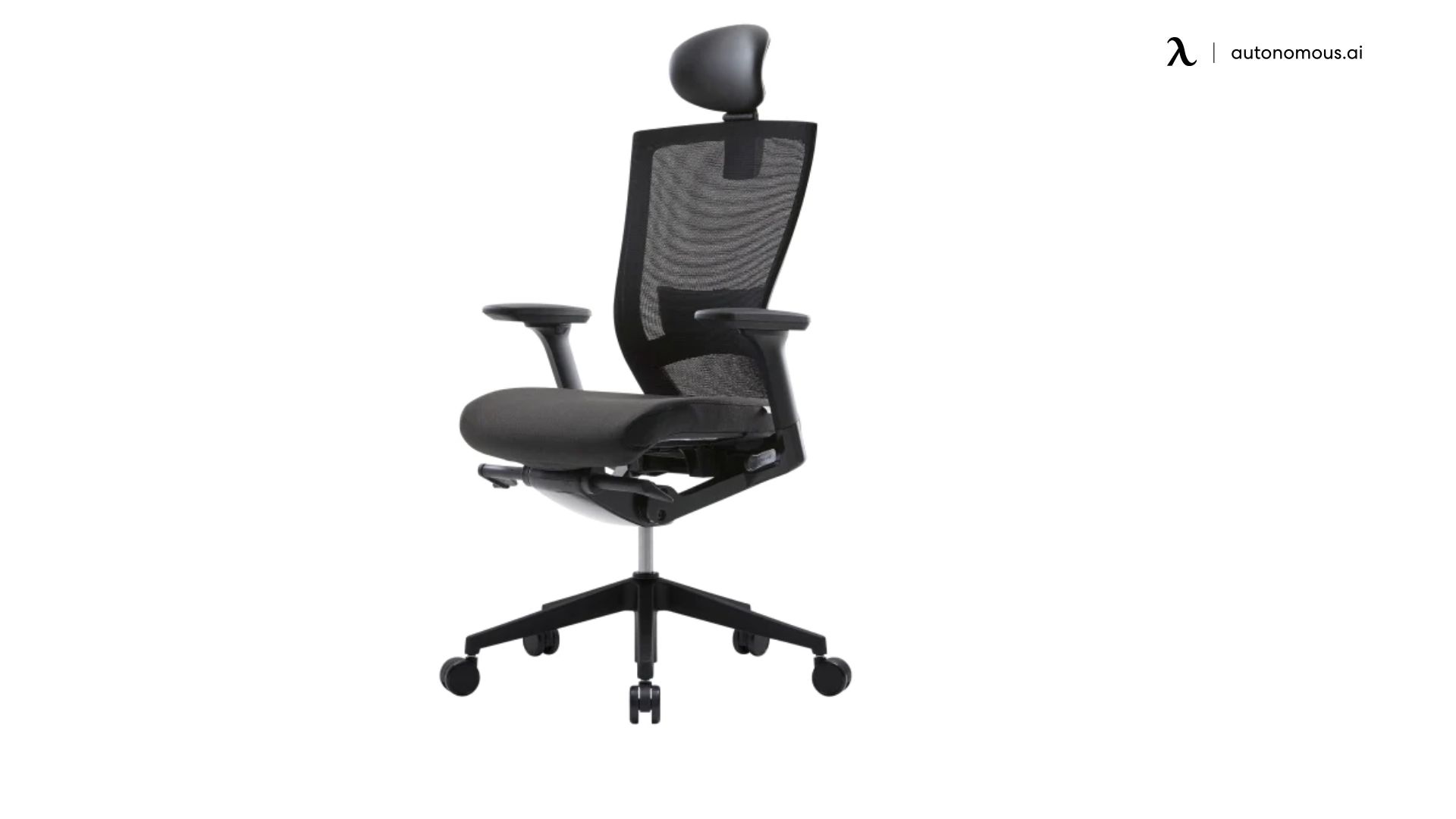
7. SIDIZ T50, best softer middle-ground
If a hard mesh seat like the Aeron's feels too aggressive but plush foam lets you sink too far, the SIDIZ T50 sits in between. Reviewers describe its medium-firm fabric seat as forgiving without bottoming out, and it adds a waterfall front edge and adjustable seat depth, so you get pressure relief behind the knees plus the ability to shift load onto your thighs. Its low seat height also suits shorter users, which matters because feet flat on the floor takes pressure off the pelvis.
The honest trade-off is breathability: the fabric seat runs warmer than mesh, so if heat is your main trigger the mesh picks above are better, or pair the T50 with a cooling cushion. The seat padding is on the thin side and the chair rolls easily on hard floors, so use a mat.
Pros:
- Medium-firm fabric seat is softer than aggressive mesh, with a waterfall edge
- Adjustable seat depth and a low seat height suit shorter sitters
- Washable seat cover and a genuinely comfortable middle-ground feel
Cons:
- Fabric seat is less breathable than mesh, so warmer for heat-driven symptoms
- Thin-ish seat padding and it rolls freely on hard floors without a mat
Ideal for: people who find mesh seats too hard but plush foam too soft, and shorter sitters who want a low seat with a forgiving surface.
What makes a chair hemorrhoid-friendly
A hemorrhoid-friendly chair reduces pressure, keeps the seat cool, and lets you move, so look for five features:
Pressure-relieving support. A seat that distributes weight evenly across the surface rather than concentrating it on the tailbone. Suspension mesh, webbing, or contoured gel seat cushion designs prevent the focused compression that causes pain.
Breathable materials. Mesh chairs allow continuous airflow, preventing the heat buildup that worsens irritation and keeping the seat surface closer to your body's natural temperature.
Even weight distribution. Contoured seat shapes that support the sit bones and thighs so no single point bears excessive load, which takes strain off the central rectal area.
Adjustability. Seat depth, tilt, and height adjustment let you hold good posture and change positions, preventing the static pressure that builds from sitting one way for hours.
Lumbar support. Proper lumbar support placement maintains your spine's natural curve and stops the slouch and forward lean that increase pelvic strain.
Standard office chairs rarely combine all five, which is why a purpose-chosen seat, or a good chair paired with the right cushion, makes a measurable difference.
Best seat cushions for hemorrhoids
If a new chair is not in the cards, a $35 to $45 cushion is the fastest way to take pressure off the sensitive area, and it pairs well with any chair above. The design is what matters: a U-shaped coccyx cut-out offloads the tailbone, a gel or mesh layer fights heat, and a donut ring is best avoided since it can compress the very area you are trying to relieve. These three are the picks worth owning.
AUVON | Doctor Butler's | ComfiLife | |
Coccyx cut-out | ✓ | ✓ | ✓ |
Cooling layer | ✗ | ✗ | ✓ gel |
Focus | Everyday tailbone | Perineal offload | Cooling comfort |
Price | $35 | $45 | $40 |
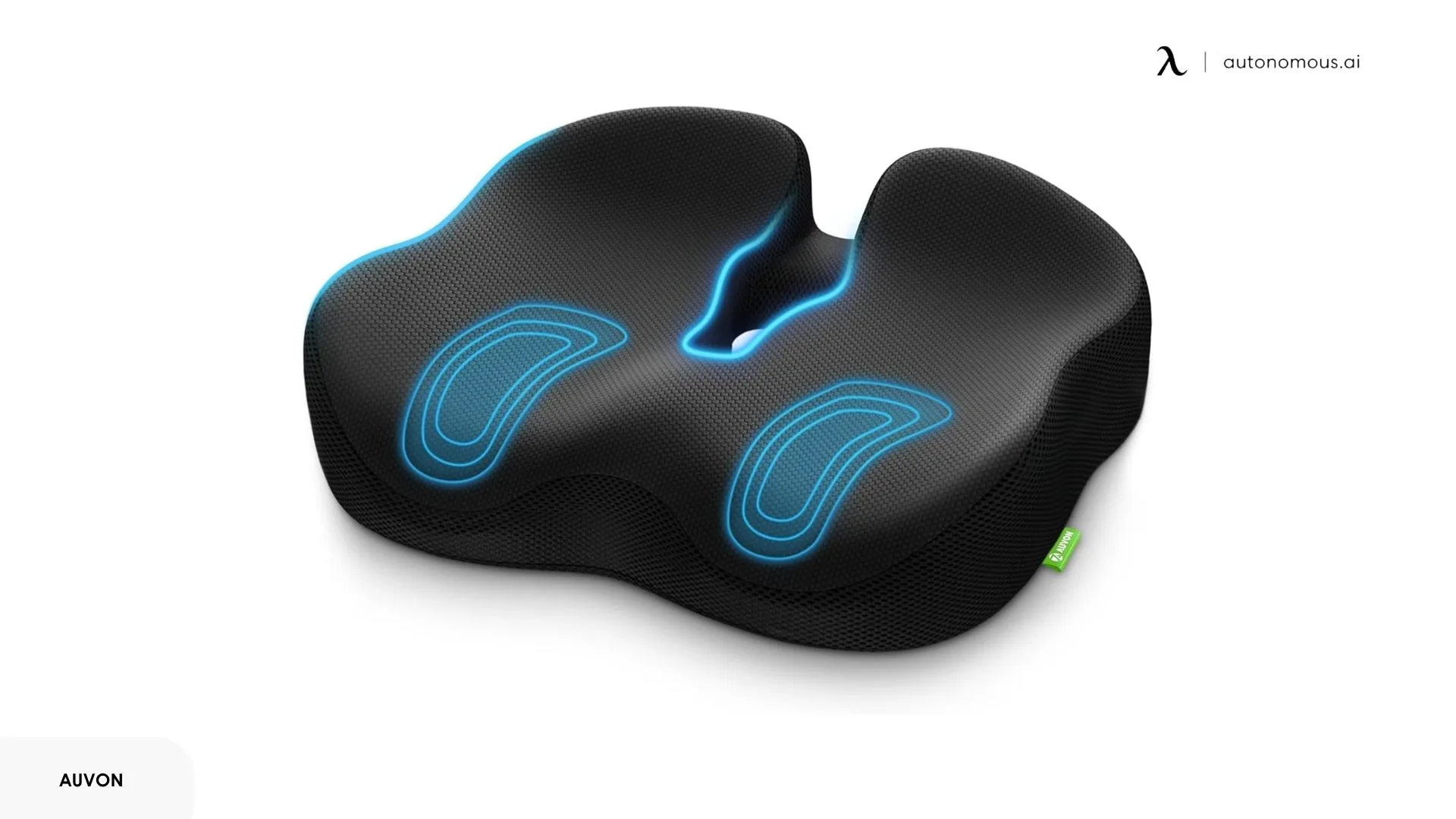
1. AUVON Ergonomic Seat Cushion
The AUVON is the reliable everyday pick, using a U-shaped coccyx cut-out, not a donut ring, that removes tailbone pressure while keeping full support under the sit bones and thighs.
Pros:
- U-shaped cut-out offloads the tailbone without a donut's compression
- High-density memory foam resists flattening over months of use
- Non-slip base and a 3-inch height that fits desk ergonomics
Cons:
- No cooling layer, so it can warm up over a long day
- Single firmness may feel too firm for some
2. Doctor Butler's Hemorrhoid Seat Cushion
Doctor Butler's is the hemorrhoid-specific pick, a memory-foam cushion shaped to redirect pressure off the perineum rather than only the tailbone, from a brand focused on hemorrhoid care.
Pros:
- Designed to offload perineal pressure, the area that matters most for hemorrhoids
- Memory foam distributes weight and holds its shape
- Comes from a hemorrhoid-focused brand, not a generic cushion maker
Cons:
- Costs more than generic coccyx cushions
- No cooling gel layer, so pair it with a breathable seat if heat is a trigger
3. ComfiLife Gel Enhanced Seat Cushion
The ComfiLife pairs memory foam with a cool-off gel layer and a U-shaped coccyx cut-out, which makes it the pick when heat is part of the problem, since the gel keeps the surface cooler through a long day.
Pros:
- Cooling gel layer helps with the heat buildup that worsens irritation
- U-shaped cut-out offloads the tailbone
- Non-slip base, washable cover, and a built-in handle
Cons:
- Gel adds weight compared with a plain foam cushion
- Memory foam can feel firm during the first few days
How to sit with hemorrhoids
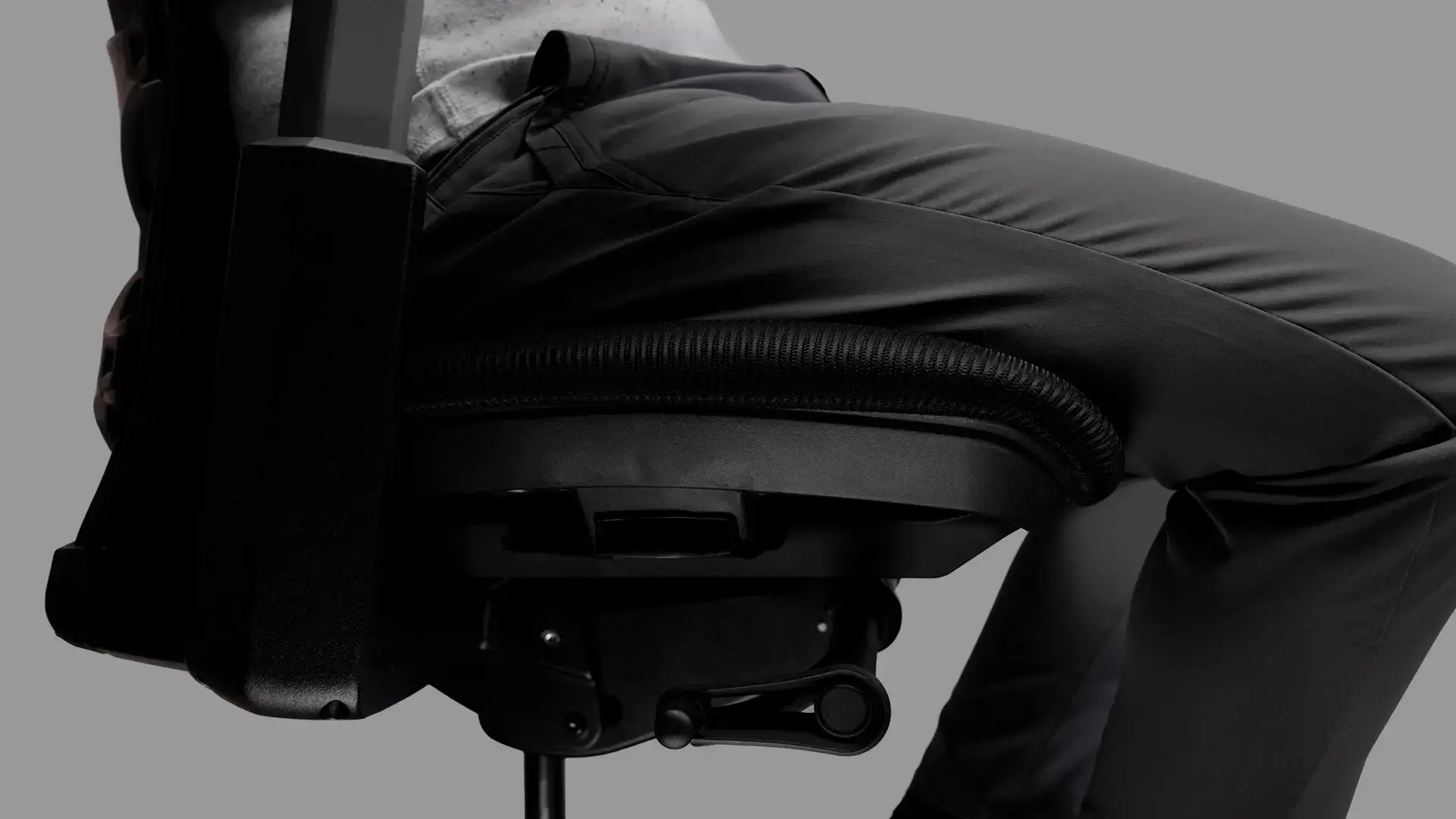
How you sit matters as much as what you sit on. Even the best chair cannot help if you stay locked in one position for hours, so the goal is to keep pressure off the sensitive area and keep blood moving.[2]
Sit fully back into the chair. Use the whole seat so your weight rests on your sit bones and thighs rather than sliding forward onto the tailbone and rectal area, and set the seat depth so there are two to three fingers between the seat edge and the back of your knees.
Tilt your pelvis slightly forward. A small forward tilt, or a gentle recline, opens the hip angle and takes direct load off the rectal area. Let the lumbar support hold your lower back so you are not slouching, which pushes weight backward onto the sore spot.
Keep your feet flat and knees near 90 degrees. Feet flat on the floor or a footrest spreads your weight and stops you perching on the front edge, and crossing your legs concentrates pressure on one side, so avoid it.
Move every 30 to 60 minutes. This is the single most effective habit. Stand, walk for a minute, or alternate with a standing desk, since prolonged static sitting is what restricts circulation and lets pressure build. Breaking it up does more than any cushion.
Add a cushion on bad days. During a flare, put a U-shaped coccyx cushion on any of the chairs above for direct tailbone offloading, and shorten your sitting stretches further.
None of this treats hemorrhoids; it manages the sitting that aggravates them. If symptoms persist, bleed, or worsen, see a doctor.
FAQs
What is the best thing to sit on for hemorrhoids?
The best thing to sit on for hemorrhoids is a surface that reduces rectal pressure and heat. Ergonomic chairs with breathable mesh seats, adjustable lumbar support, and waterfall edges distribute weight away from the rectal area. On a budget, a U-shaped coccyx cushion relieves tailbone pressure without the compression issues of a donut ring.
What is the best office chair for piles?
Piles is another word for hemorrhoids, so the same rules apply. The best chair for piles sufferers has a breathable mesh or webbing seat, adjustable seat depth, and a waterfall edge to keep pressure and heat off the area. Shifting position often and adding a coccyx cushion during a flare-up manages symptoms best.
Do ergonomic chairs help with hemorrhoids?
Yes. Ergonomic chairs help by redistributing body weight to the thighs and sit bones, which reduces pressure on the rectal area. Features such as adjustable seat depth, waterfall edges, breathable mesh, and lumbar support lower both pressure and heat buildup, though frequent movement still matters most.
Is a mesh office chair good for hemorrhoids?
Yes. Mesh office chairs suit hemorrhoids well because they improve airflow and reduce the heat and moisture buildup that worsens irritation. A breathable mesh seat combined with proper support and seat-depth adjustment helps keep pressure and temperature off the sensitive area during long workdays.
Can an office chair cause hemorrhoids?
Prolonged sitting on a poorly designed office chair can contribute to hemorrhoids by increasing rectal pressure and restricting blood flow. Chairs that are too firm, lack lumbar support, or promote a slouched posture raise the risk. The right ergonomic chair helps prevent hemorrhoids from worsening by easing that pressure and improving airflow, which is why breathability, support, and movement matter.
Can a reclining chair help with hemorrhoids?
Yes. A reclining ergonomic chair helps by shifting body weight away from the rectal area and improving circulation. A mild recline with lumbar support reduces strain, but frequent posture changes and standing breaks are still essential, since no single position stays comfortable for hours.
Are kneeling chairs good for hemorrhoids?
Kneeling chairs can help by improving posture and reducing direct pressure on the tailbone and rectal area. They are not ideal for full workdays, though, because they place more load on the knees and shins, so they work best in rotation with a standard ergonomic chair.
Should I use a standing desk if I have hemorrhoids?
Yes. Alternating between sitting and standing is one of the most effective ways to reduce hemorrhoid discomfort. A standing desk minimizes prolonged pressure, improves circulation, and encourages movement, so aim to switch between sitting and standing every 30 to 60 minutes rather than standing all day.
Conclusion
The best chair for hemorrhoids comes down to reducing pressure and avoiding long stretches of static sitting. Prioritize a breathable seat, adjustable seat depth, and enough recline to change positions, and add a U-shaped cushion when you need direct tailbone offloading. Among these picks, the ErgoChair Ultra 2 and Mesh cover the pressure and heat problems with breathable, adjustable seats, the Embody leads on premium pressure distribution, the Core and Sihoo Doro C300 deliver the essentials on a budget, and the SIDIZ T50 is the softer middle-ground for people who find mesh too firm. Whichever you choose, move often, and treat persistent or severe symptoms as a reason to see a doctor rather than a seating problem alone.
References
- Mayo Clinic. Hemorrhoids: symptoms, causes, and the role of prolonged sitting. https://www.mayoclinic.org
- Cleveland Clinic. Hemorrhoids and sitting pressure. https://my.clevelandclinic.org
- National Institute of Diabetes and Digestive and Kidney Diseases (NIDDK), NIH. Hemorrhoids: prevention and self-care. https://www.niddk.nih.gov