Best Petite Office Chairs for Short People 2026

.webp)
If you are short, you have probably learned the hard way that most "petite" office chairs are not really petite. They are standard chairs with the word petite added to the listing, so the seat still starts too high, the lumbar still lands between your shoulder blades, and the arms are still set for wider shoulders than yours. The fix is to stop trusting the label and read two numbers instead: the minimum seat height, and whether the seat depth adjusts. Below are seven office chairs that actually fit a short frame, what each is like for a small body, and how to set any of them up so you stop hurting by mid-afternoon.
Quick comparison
CabLady S2 | Sidiz T25 | Aeron Size A | Leap V2 | OM Paramount | |||
Min seat height | 18.5" | 18" | 17.3" | 15.7" | 14.75" | 15.5" | 15.5" |
Seat depth adjusts | Yes | Yes | Yes | No | No | Yes | Yes |
Price | $499 | $449 | $410 | $355 | $1,835 | $650 | $571 |
The 7 best petite office chairs
1. Autonomous ErgoChair Pro, best for lower-back pain
Specs:
- seat height 18.5-22"
- adjustable seat depth 19-21.5"
- 3D arms 11-14"
- 6-inch sliding lumbar
- 22-degree recline with 5 locks
- 9 adjustment points
- 300 lb
- lifetime warranty
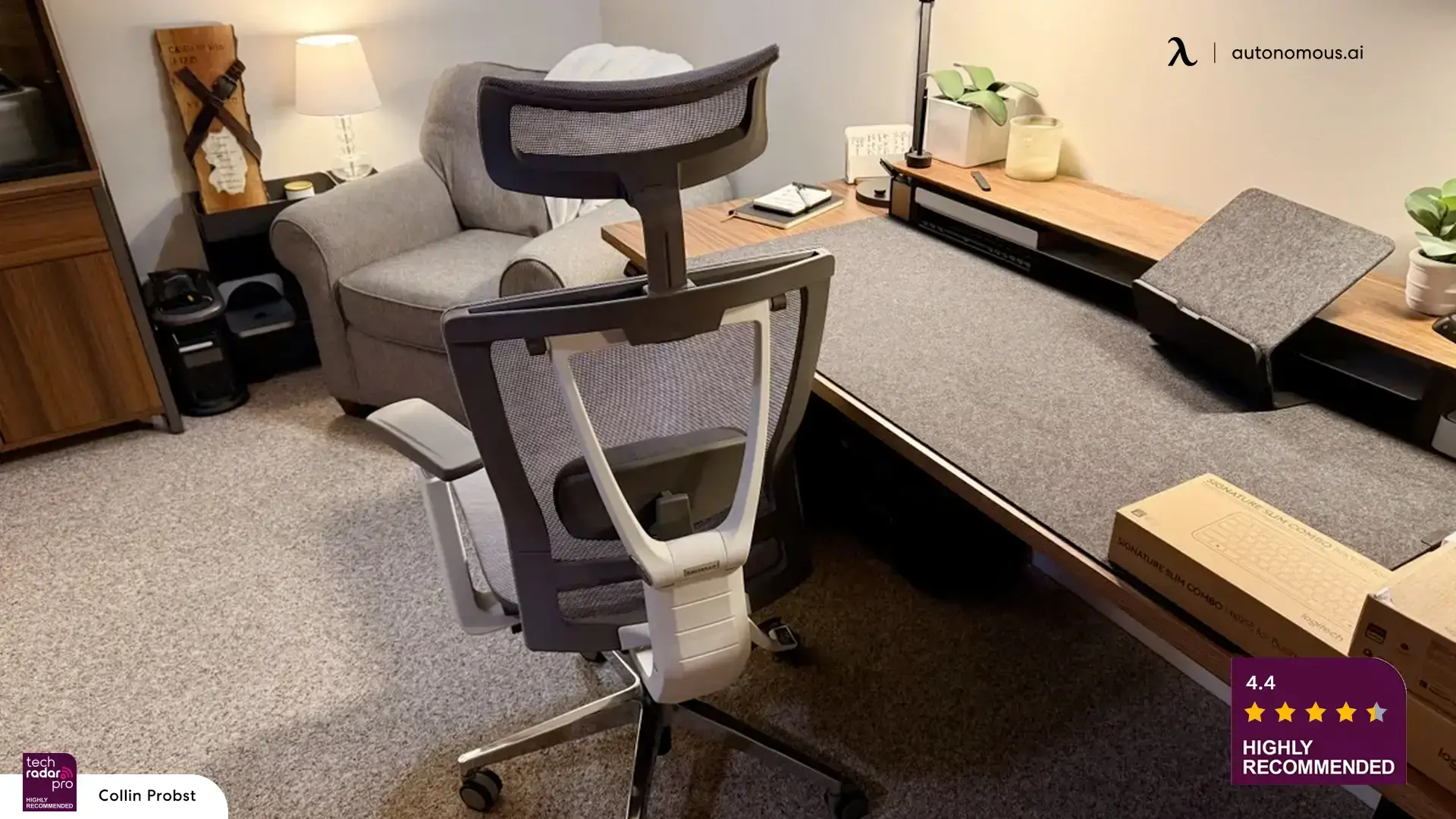
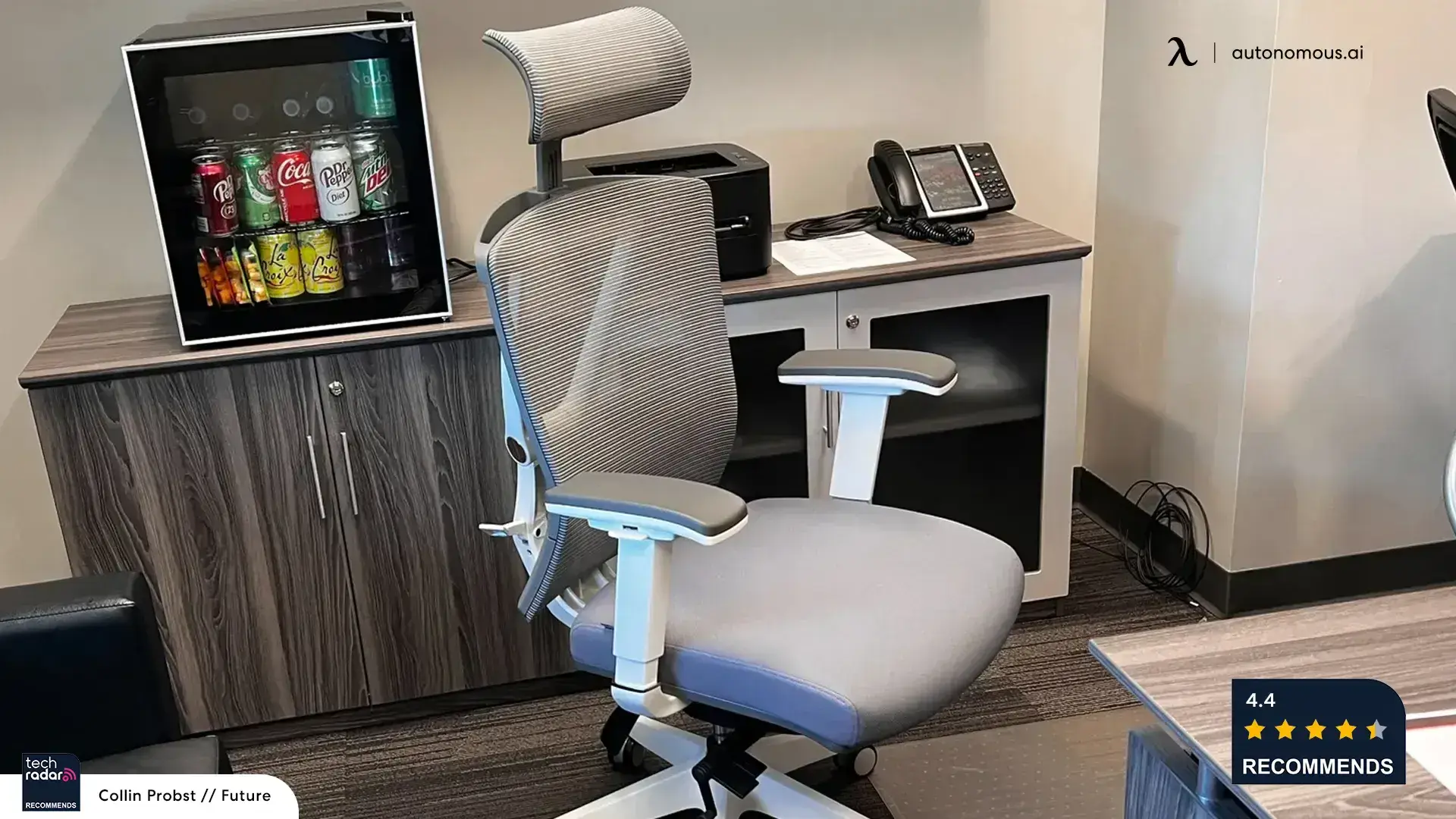
For a short user, the first move is to slide the lumbar all the way down, and that is where the ErgoChair Pro earns its spot as an ergonomic chair for a short person with back pain. The pad then sits on the lower back instead of the shoulder blades, which is the fix for the ache most short people wrongly blame on their posture. On a standard chair the lumbar curve is built for someone five or six inches taller, so it lands in the mid-back. The Pro's sliding lumbar travels a full 6 inches, more room to place support on a short torso than almost any petite chair in this price range.
The seat drops to 18.5 inches, the seat depth shortens so the front edge clears the backs of the knees, and the synchro-tilt locks at five recline points. The seat still starts higher than a truly petite chair, so under about 5'3" a footrest is part of the setup, and while the 3D arms pull in for narrow shoulders they do not drop below 11 inches. What makes it worth it is the support and the backing: nine adjustment points, a mechanism rated to 100,000 cycles, and a lifetime frame warranty rather than the 3 to 12 years most competitors here offer.
Pros:
- Sliding lumbar travels 6 inches, low enough for a short torso
- Seat depth and 3D arms adjust in to a smaller frame
- Lifetime frame warranty on a 100,000-cycle mechanism
Keep in mind: The seat starts at 18.5 inches, so under about 5'3" a footrest is part of the setup
2. Autonomous ErgoChair Ultra 2, best overall for posture
Specs:
- seat height 18-23"
- adjustable seat depth 18-20.5"
- 4D arms 7-11"
- lumbarless flex-frame
- 320 lb
- lifetime warranty
.webp)
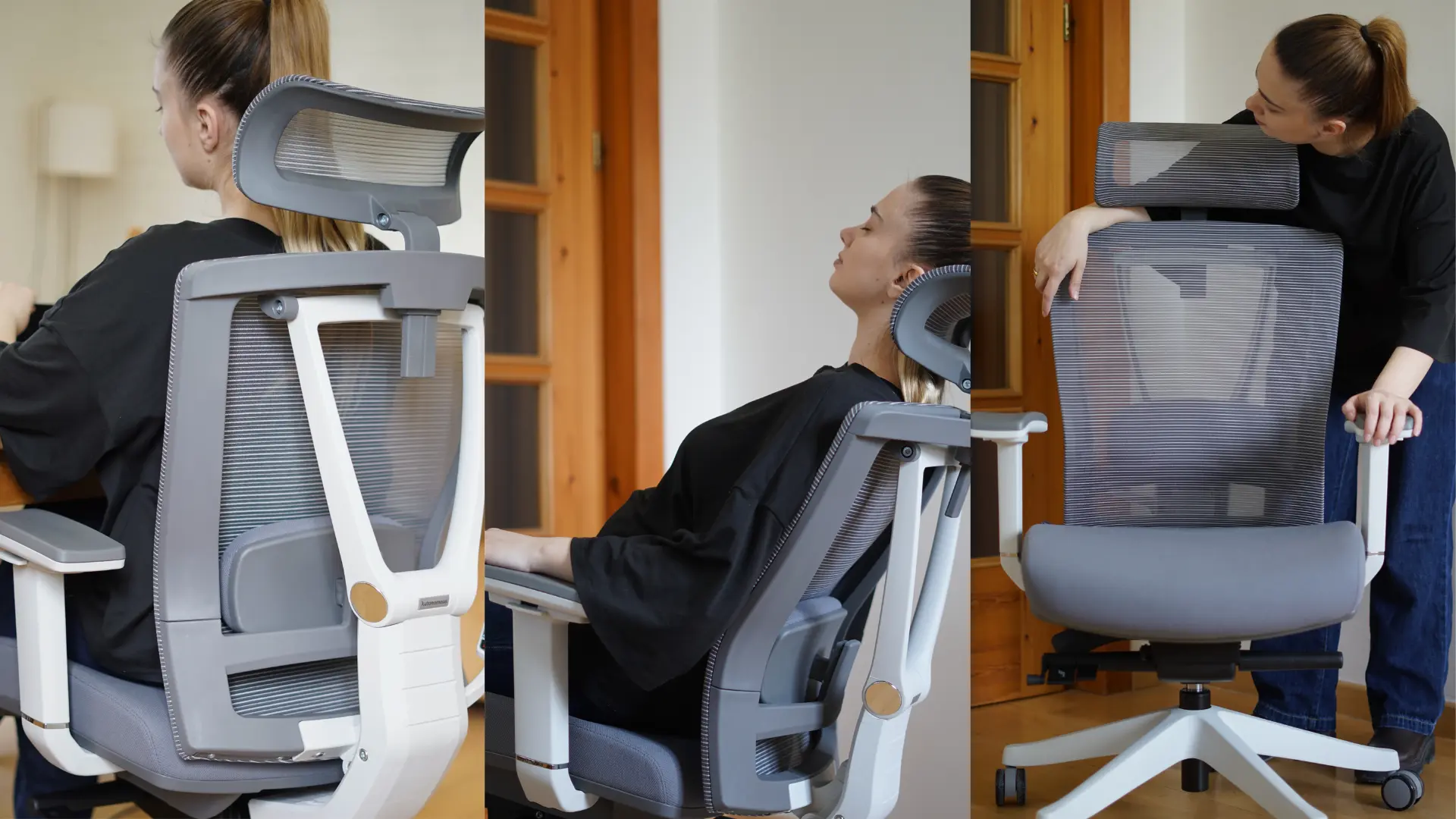
The Ultra 2 solves lumbar the opposite way, which for a short torso is often the smarter fix. There is no pad to place: the whole back is a lumbarless flex-frame, two backrest layers over 62 pressure nodes that flex as you move, so no fixed bump waits to land between the shoulder blades. A standard lumbar set for someone taller presses in the wrong spot, while a flex-frame supports the whole spine wherever your back happens to be.
The standout for a small frame is the arms. The 4D armrests drop to 7 inches above the seat, the lowest here, and pull inward, so narrow shoulders relax instead of hiking up to reach the pads. The seat starts at 18 inches, a hair lower than the Pro but still footrest territory under about 5'2", and the depth shortens to 18 inches so the front edge clears the knees. The four-layer seat spreads weight instead of pooling it at the hips, which matters most on long days.
Pros:
- 4D arms drop to 7 inches and pull inward, the lowest here
- Lumbarless flex-frame, so no fixed pad lands wrong on a short back
- Four-layer seat spreads weight, with a lifetime frame warranty
Keep in mind: The seat starts at 18 inches, so a footrest is still part of the setup under about 5'2"
.webp)
3. CabLady S2, most purpose-built petite fit
Specs:
- seat height 17.3-20.8"
- adjustable seat depth 15.7"
- 3D flip-up arms
- adjustable low lumbar
- 4D headrest
- built-in footrest
- reclines to 136 degrees
- 330 lb
- 3-year warranty
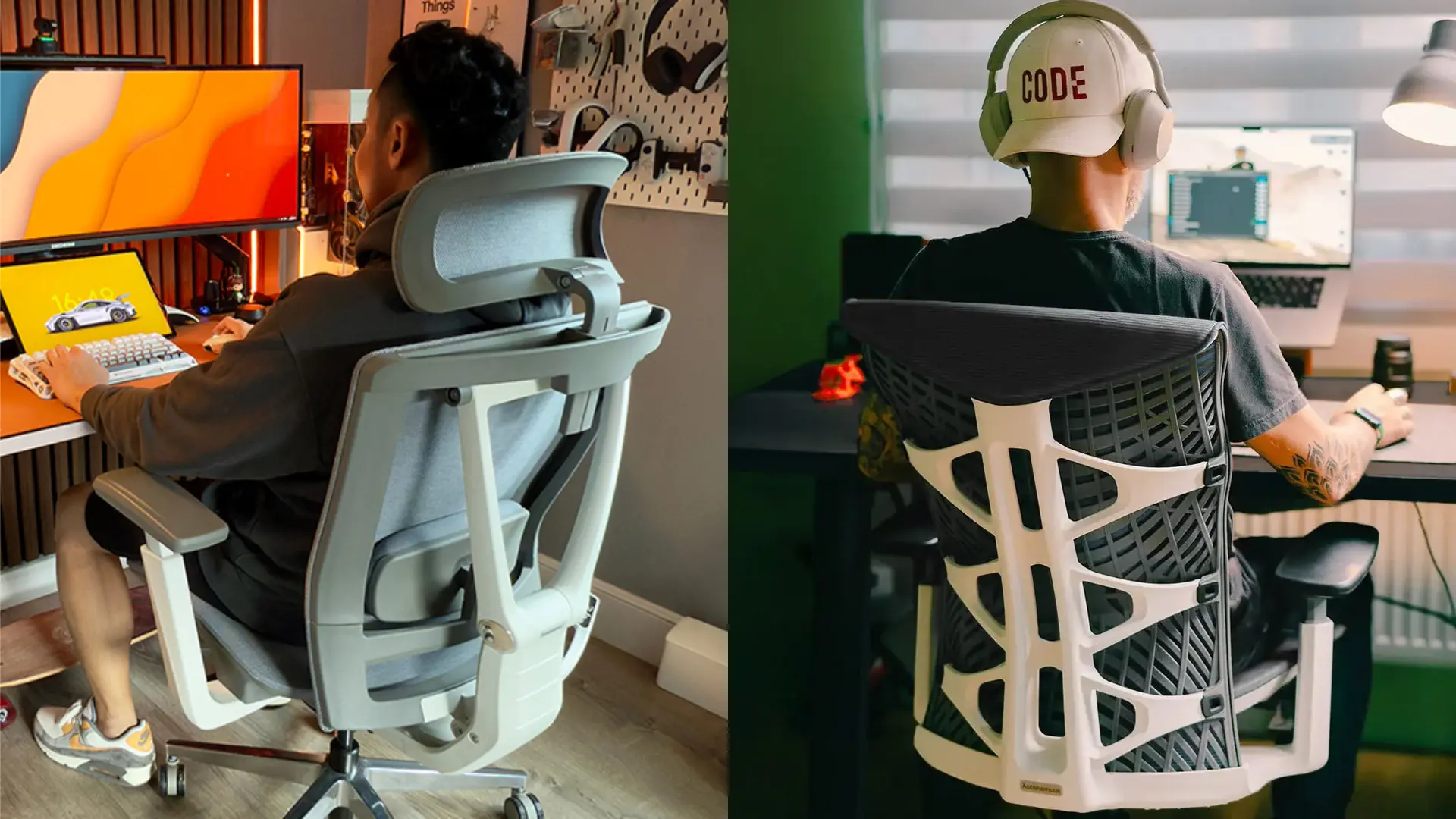
This is the most purpose-built-for-petite chair on the list, and you feel it right away. It is designed around a petite woman's frame, roughly 4'9" to 5'11", and it shows in the details. The lumbar sits low and adjusts to a short waist, so support lands on your lower back instead of your mid-back, and the seat depth shortens by more than two inches so the front edge clears your knees. Best of all, it has a footrest built into the chair, so you are not buying one separately or dragging one over, and it reclines to 136 degrees, far enough to actually lean back and rest, which most petite office chairs cannot do. The 4D headrest adjusts low enough for a shorter neck, and the cushioned seat is softer than the mesh chairs here.
The trade is real, though. The warranty is three years against the lifetime coverage on the Autonomous chairs, and it is a newer brand with a molded-plastic frame rather than a proven one. If out-of-the-box petite fit matters more than long-term durability, it is genuinely the closest fit here. If you want that fit to still be there in a decade, weigh the warranty.
Pros:
- Built around a petite frame, 4'9" to 5'11"
- Low adjustable lumbar, plus seat depth that shortens over 2 inches
- Footrest built into the chair, and it reclines to 136 degrees
Cons:
- 3-year warranty, the shortest coverage on this list
- Newer brand with a molded-plastic frame
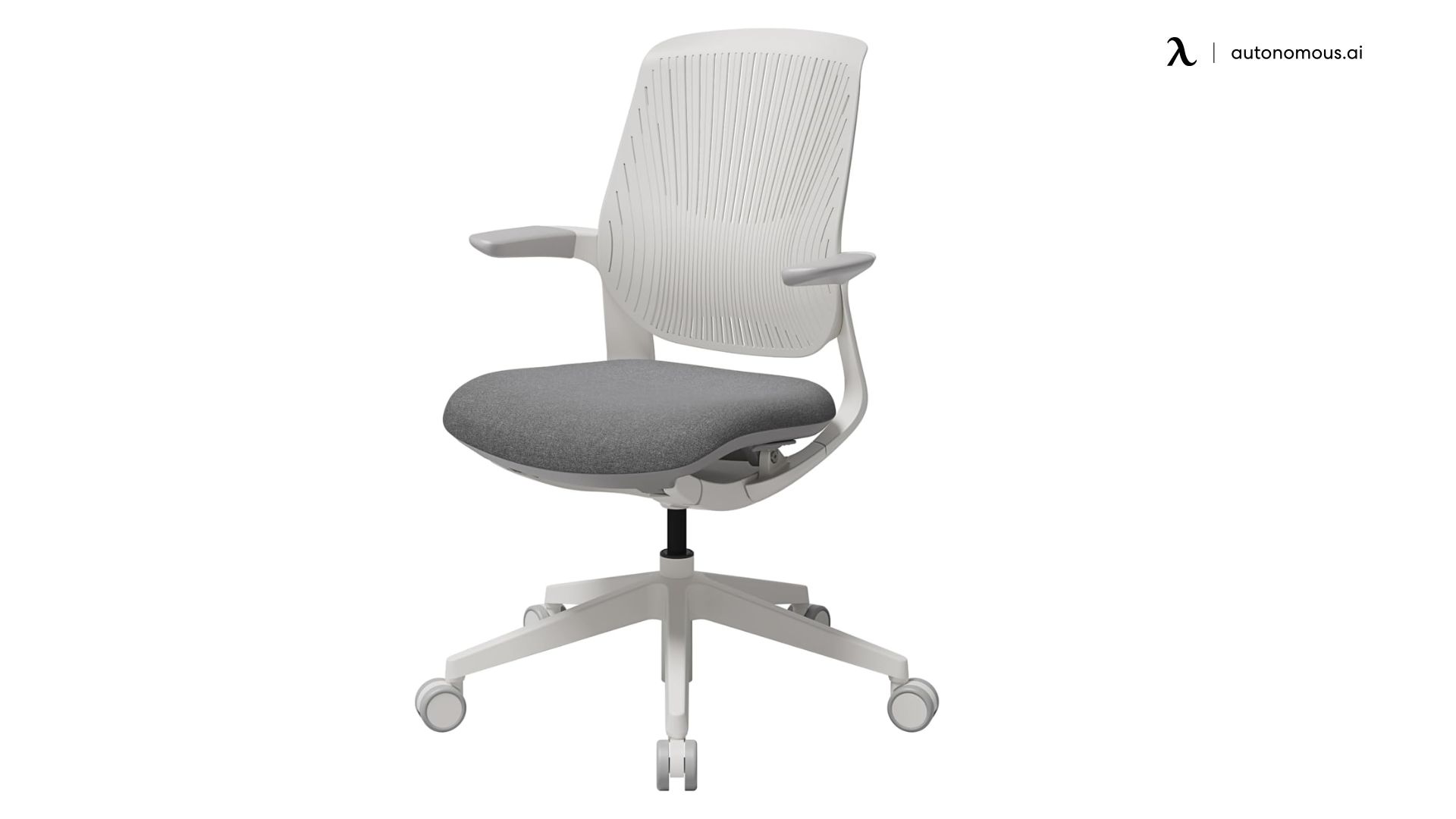
4. Sidiz T25, best low-cost low seat
Specs:
- seat height about 15.7-20.7"
- fixed seat depth
- fixed arms
- no lumbar
- auto-fit tilt
- 275 lb
- up to 12-year warranty
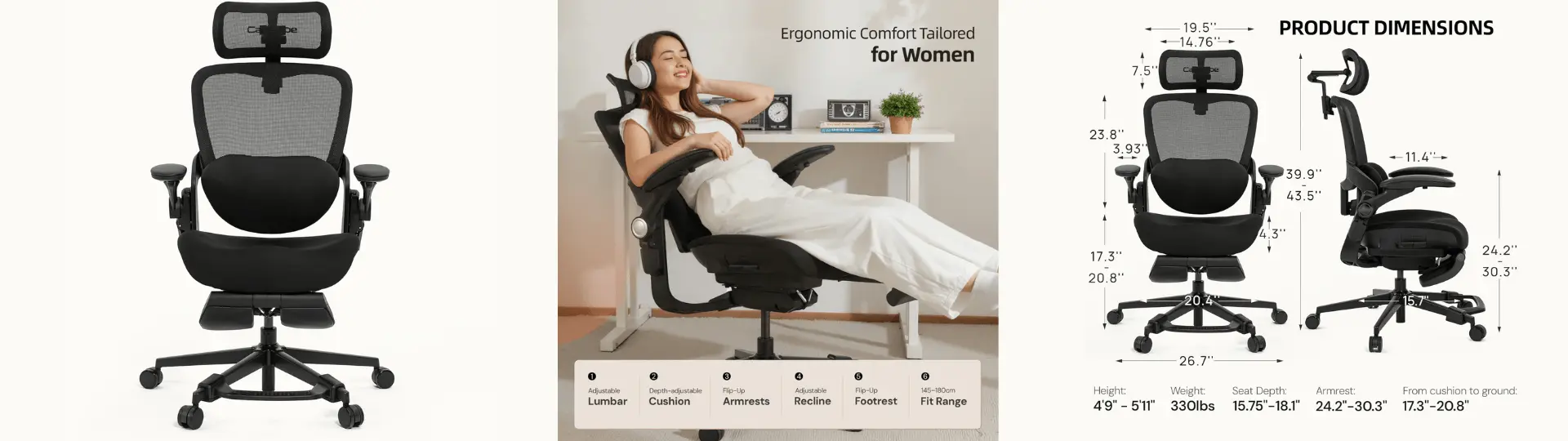
The Sidiz T25 is one of the few chairs here genuinely sized for a small body, built for people 4'9" and up, and it shows the moment you sit down. The seat goes low enough that most short users reach the floor without a footrest, and a weight-sensing auto-fit tilt sets its own recline tension, so there is no knob to hunt for. It is the simplest chair to just sit in, and the most affordable pick on this list.
What you give up is adjustment. There is no lumbar to place, the arms do not move, and the seat depth is fixed, so if your back pain comes from lumbar position rather than seat height, this will not solve it. It is the pick when you want a small, simple, affordable chair, not something to fine-tune.
Pros:
- Genuinely sized small, seat dropping to about 15.7 inches
- Weight-sensing auto-fit tilt, so no tension knob to set
- The most affordable pick here, backed up to 12 years
Cons:
- No lumbar support to position
- Fixed arms and a fixed seat depth, so very little adjusts to you
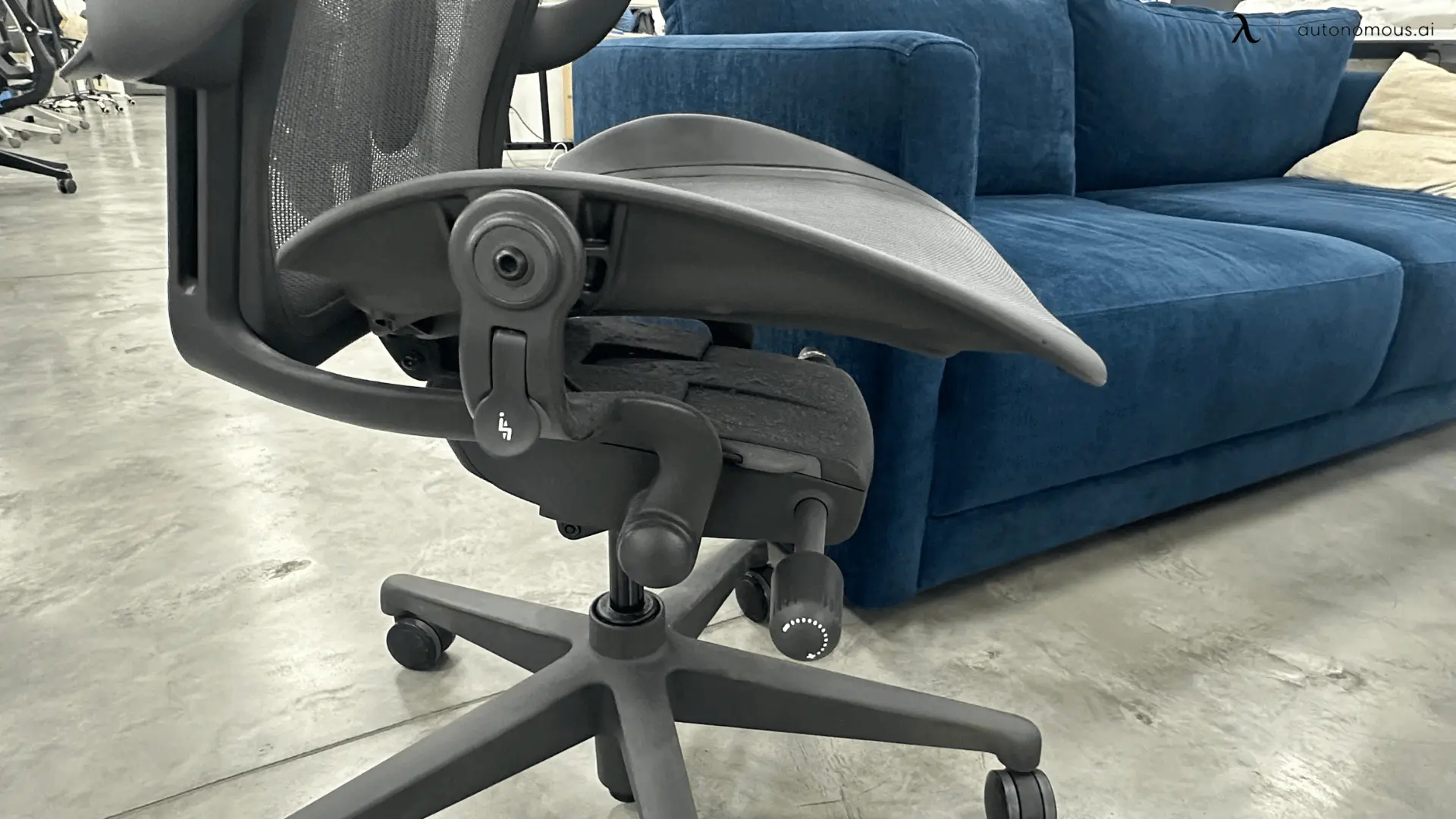
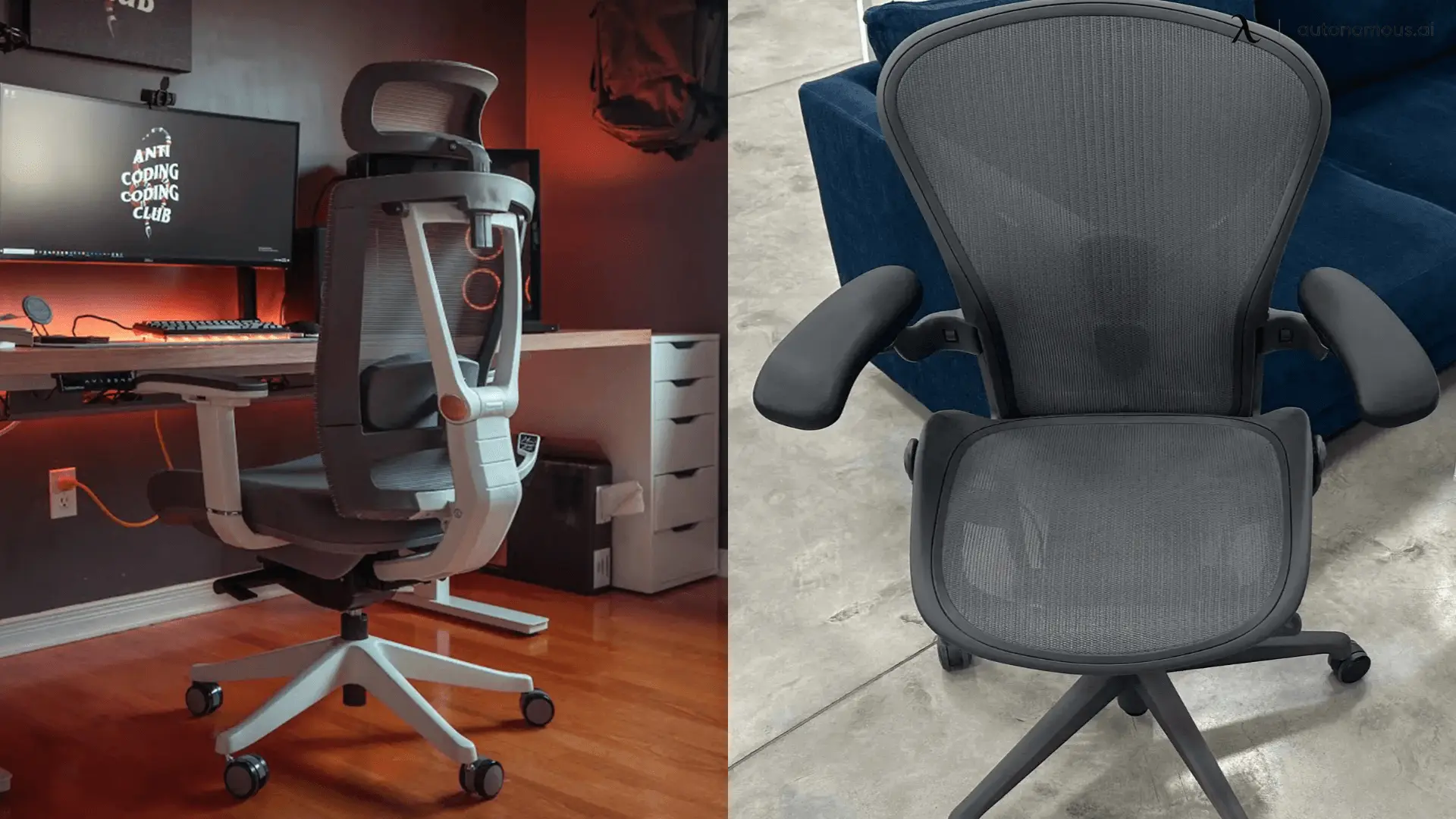
5. Herman Miller Aeron Size A - Lowest seat, but the fit doesn't adjust
Specs:
- seat height 14.75-19"
- fixed 16" seat depth
- arms 7-11.5"
- PostureFit SL lumbar
- 300 lb
- 12-year warranty
The Aeron Size A is the one chair here that genuinely goes low, 14.75 inches, so a 5-foot person can sit with feet flat and no footrest. The 8Z Pellicle mesh runs cool, the tilt is smooth, and the build is famously durable under a 12-year warranty. But for a short frame it has two catches: the seat depth is fixed at 16 inches, so a shorter thigh cannot be dialed out of the backs of the knees, and it is by a wide margin the most expensive chair here. You are paying premium money for a low seat you could otherwise get from a footrest under a cheaper chair.
Pros:
- The lowest seat here at 14.75 inches, feet flat unaided
- 8Z Pellicle mesh runs cool, with a 12-year warranty
- Holds resale value better than anything else here
Cons:
- Seat depth is fixed at 16 inches with no adjustment
- By a wide margin the most expensive chair here
- No headrest offered at any price
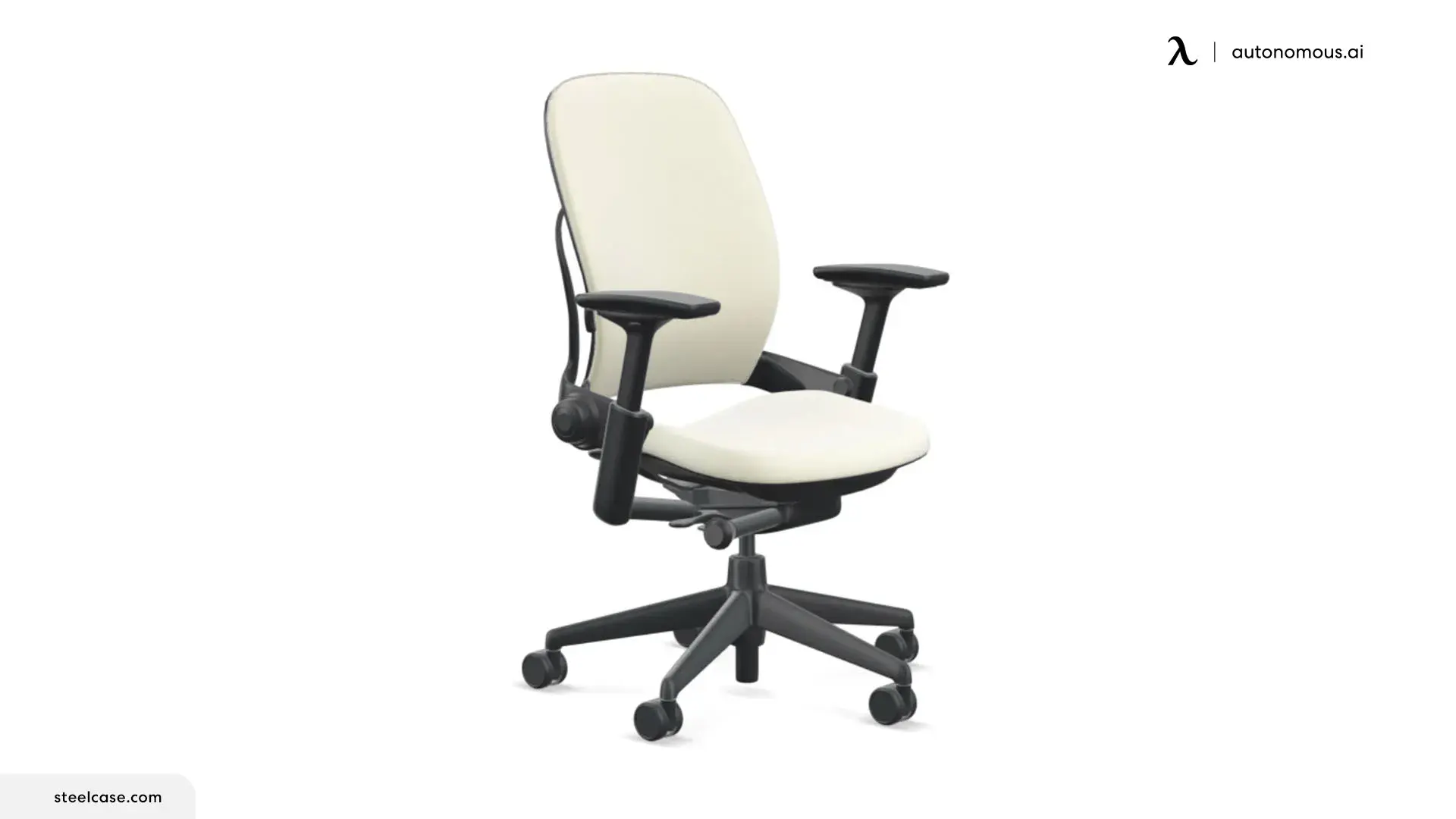
6. Steelcase Leap V2 - Adjustable, but restored, not new
Specs:
- seat height about 15.5-20.5"
- seat depth to ~15.7"
- arm width 12.75-20"
- adjustable lumbar
- 400 lb
- dealer warranty
A refurbished Steelcase Leap V2 is how you get serious adjustability without new-chair prices, which makes it one of the better-value ergonomic chairs for a short person here. Its lumbar travels almost to the bottom of the backrest, exactly what a short torso needs, and its arm-width range is among the widest made, so the arms pull in for narrow shoulders. It also adjusts seat depth and lumbar firmness.
Refurbished units from reputable sellers run around $650, roughly half the price of new, with the same fit and a long dealer warranty. The catch is that it is restored rather than new, the 4D arms that matter most to short users are usually a paid upgrade, and you should confirm the exact minimum seat height with the seller, since some units sit closer to 16.75 inches than the 15.5 that gets quoted.
Pros:
- Lumbar travels almost to the base of the backrest, ideal for a short torso
- Arm-width range among the widest made, so the pads pull in
- Roughly half the price of new, with the same fit
Cons:
- Restored rather than new, so condition varies by seller
- The 4D arms short users need most are usually a paid upgrade
- Minimum seat height varies by unit, so confirm it before buying
7. OM Paramount Petite - Narrow arms, but a basic build
Specs:
- seat height 15.5-20"
- seat depth to 16"
- arms from 13.25" wide
- basic lumbar
- 7-year warranty
If the thing that kills you is arms set too wide, the OM Paramount Petite is the chair. Its arms pull in to 13.25 inches, the narrowest here, and drop low, so a narrow-shouldered user can reach the pads without hiking up the shoulders. It is sized for a petite frame and adds seat-depth and forward-tilt adjustment, which makes it the most adjustable petite office chair under $600.
The trade is that the build sits a notch below the premium chairs, the seat is firm, and the lumbar is basic rather than something you finely position. It is the right call when narrow shoulders are the main problem and you want real adjustment without a premium price.
Pros
- Arms pull in to 13.25 inches and sit low, the narrowest here
- Adds seat-depth and forward-tilt adjustment
- The most adjustable petite chair under $600
Cons
- Build sits a notch below the premium chairs
- Firm seat, and a basic lumbar you cannot finely position

What to look for in an office chair for short people
A chair is only really petite if the numbers back the label. Two specs decide it, and three more decide how well it fits once you are in it.
Seat height is the number that matters most.
If a chair starts around 17 to 18 inches with a fixed depth, it is a standard chair no matter what the listing says. Truly petite seats start around 15 to 16 inches, low enough to keep your feet flat. If a chair you like starts a little higher but supports and adjusts well, a footrest closes the gap.
Seat depth has to shorten for a short thigh.
A seat that is too deep forces a bad choice: either your feet stay flat and your back leaves the backrest, or your back stays supported and your feet dangle. An adjustable seat depth lets the front edge clear the backs of your knees by an inch or two, which is why it beats a low seat alone.
Lumbar has to reach your lower back.
A fixed lumbar set for a taller user lands in the mid-back and is the most common cause of back pain in short people. Look for a lumbar that slides low, or a flex-frame back that supports the whole spine with no fixed bump.
Arms have to pull in and drop low.
Narrow shoulders need armrests that come inward and sit low enough that your shoulders relax rather than hike up to reach them.
A footrest is a legitimate fix, not a failure.
If the best-supporting chair for your back starts an inch too high, a footrest is cheaper and healthier than perching on the front edge of a lower seat with no support.
.webp)
What seat height do you need for your height?
Match the seat height to your height first, then use a footrest if the chair you want bottoms out a little high.
Your height | Ideal seat height | Footrest? |
|---|---|---|
Around 5'0" | 14 to 16 inches | Yes, on most chairs |
Around 5'2" | 15 to 17 inches | Often |
Around 5'4" | 16 to 17 inches | Sometimes |
A seat height around 15 inches suits users under about 5'2" who want feet flat without a footrest, but confirm the chair also adjusts seat depth and lumbar, since a low seat alone does not guarantee a good fit.
How to set up an office chair if you are short
The right chair at the wrong height still leaves you sore, so set it up for your body:
- Drop the seat as low as it goes. If your feet do not sit flat, add a footrest rather than perching on the front edge.
- Shorten the seat depth until the front edge clears the backs of your knees by an inch or two.
- Check the desk. A short seat usually makes a standard 30-inch desk too tall, so lower it or add a keyboard tray to keep your forearms level.
FAQs
What is the best office chair for a short person?
The best office chair for a short person combines a low or footrest-supported seat with adjustable lumbar, seat depth, and arm position so the chair fits a small frame instead of forcing you into it. Full adjustability and durable support matter more than seat height alone.
What is the chair height for a 5 ft person?
For someone 5 feet tall, a seat height of 14 to 16 inches keeps the feet flat and knees at a natural angle. Chairs that start higher can still work well with a footrest, as long as they also adjust seat depth and lumbar to a small frame.
What is a good seat height for short people?
A good seat height for short people is generally 15 to 17 inches. If a chair starts slightly higher but offers better support and adjustability, a footrest closes the gap, which is often a better result than a low seat with no adjustment.
What is the best seat depth for petite people?
The best seat depth for petite people is 14 to 16 inches, so the front of the seat sits one to two inches from the back of the knees without pressing into them. An adjustable depth matters more than a single fixed measurement.
What seat height is best for 5'2"?
For a 5'2" person, a seat height of 15 to 17 inches gives proper alignment. A footrest lets you use chairs that bottom out a little higher.
What is a petite office chair?
A petite office chair is built for users under about 5'4", with a lower seat, shallower depth, and a smaller frame proportioned for shorter bodies. Many chairs use the word without the specs to back it, so check seat height and depth.
What is the best office chair for back pain for a short person?
For a short person with back pain, the best chair has adjustable lumbar that reaches the lower spine, plus seat-height and seat-depth adjustment. A fixed lumbar set for a taller user is the most common cause of mid-back pain in short people, so a sliding or flex-frame back matters most.
Which ergonomic office chair with lumbar support is best for short people?
The best options offer adjustable lumbar support that aligns with your natural spine curve. Chairs with adaptive or full-back support - rather than a single fixed bump - fit a short torso best.
What is the best office chair with a 14-inch seat height for short people?
A 14-inch seat height suits users under 5'2" who want feet flat without a footrest. Confirm the chair also adjusts in seat depth and lumbar, since a low seat alone doesn't guarantee a good fit.
What is the best office chair for a 5-foot person?
For a 5-foot person, look for a 14 to 16 inch seat height and shallow seat depth, or a chair that adjusts well paired with a footrest.
.webp)
Bottom line
If you are short and sore at your desk, you are not too picky, and your body is not the problem, the chair is. Ignore the petite label and read two numbers, seat height and seat-depth adjustment, then pick by what you most need to fix: a lumbar you can place low, arms that pull in, or the lowest seat if you are closest to 5'0". The purpose-built petite chairs fit small bodies out of the box, while the Autonomous office chairs adjust to your frame with a footrest and are backed for life. Add a footrest, lower your desk, and the day-end ache usually goes with it. Persistent pain is worth a word with a professional.
References
- Occupational Safety and Health Administration (OSHA). Computer Workstations eTool: Chair. https://www.osha.gov/etools/computer-workstations/components/chairs
- Cornell University Ergonomics Web. Office Ergonomics Guidelines. https://ergo.human.cornell.edu/